Showing posts with label activity. Show all posts

Monday, April 11, 2016

The Runaway - Part Three

Hey again, digressors. How are things going for everyone? Things have been interesting for me. A combination of physical and mental health issues have made getting things done complicated, but at last I appear to be on a bit of an upswing, so I am again getting a few things done. And among those things I'm doing is writing! I'm doing Camp NaNoWriMo, as I do twice a year, every year, regardless of whether I have much chance of winning. It gives a distractible person such as me a bit more motivation to be organized and set achievable goals. 

Speaking of distractibility, you probably didn't click on this post to hear me talk about my schedule, did you? Well, if you did, I apologize, because at the moment I don't have much of a schedule to speak of -- just a list of things I need to catch up on doing. So as I run off to do some of that catching up, I shall give you something that is long overdue... 

The Runaway
Part Three


The rest of the day passed in a blur of classes and practice sessions with some of the more established recruits, and the next morning Jorthen awoke to more of the same. Except by morning, there were also whispers everywhere, and if he listened hard enough, he heard words like “Shamindo”, “spy”, and “horse thief”. 
“I heard,” said a wide-eyed, raven-haired girl who had arrived with last month’s batch of new recruits, “that he set fire to a family’s house so that he could have their horse. That way there were no witnesses, and so he would have gotten away with it if Lieutenant Lavahr hadn't caught him.” 
Caught him, indeed. Jorthen quickened his step to get past the clump of teenagers before they could spot him. Besides the sensitivity of the issue, the fond tone the girl adopted when she said his name unnerved him even more. 
When he arrived at Geram’s quarters — just off of the medical room — he took an extra moment to listen at the door before knocking on it. He heard no yelling or objects smashing, only a less than intelligible grumbling, so he gave himself permission to enter. 
The door creaked as he opened it, and across the room, Geram spoke but didn't turn. “About time you got here.” 
“I’m sorry, I was delayed.” Jorthen walked forward until he could see past Geram and smiled politely to avoid grimacing. “Good morning, San.” 
The boy sat quietly as Geram worked on him, but his eyes flitted just as nervously as ever between Geram and Jorthen. He was upright this time, and his hands fiddled nervously with each other in his lap. They were burned, but not nearly as badly as his back, which was thankfully turned away from Jorthen. 
In lieu of getting an answer, Jorthen cleared his throat and addressed Geram. “Is he fit to be moved yet?” 
“He’d better be, if your recruits are going to keep crowding the area in an attempt to see him.” Geram cut a length of bandages free and flung the roll back into its respective basket. “I’m a physician, not a showman.” 
“I apologize,” Jorthen said. “If you say he’s well enough, I’ll work on finding him a place to stay.” 
“You mean you’ll be taking him to confinement.” 
Jorthen blinked. “Confinement? Why would I do that?” 
Geram sighed heavily and wrapped the new bandage around San’s freshly salved arm. “The boy’s a criminal, Lavahr. He has to face trial.” He hesitated in his work and said more quietly, “Sorry, lad. That’s the way it works around here.” 
San swallowed hard and looked at his still twitching hands without response. 
Something about the reminder of how the system worked awoke a knotting feeling in Jorthen’s stomach. He glanced at the door. “What if I took him?” 
“We’ve just addressed that.” 
“No, I mean if I took him into my custody.” He turned again to look at Geram. “I could do that, couldn’t I? Take responsibility for him until the council decides what to do with him?” 
Geram studied Jorthen and seemed to mull over his question as he secured the bandage. “Aye, I suppose you could. But it would involve paperwork.” 
“I’m used to paperwork.” 
A raspy voice asked, “Would I live with you?” 
Jorthen had nearly forgotten how much the smoke had affected San’s voice. Or was it always like that? He stepped forward cautiously. “It would be safer. But then, it would also mean you’d have to follow me around a fair amount. I’d be your guardian.” 
“I don’t trust guardians.” 
“…An older brother, then. Temporarily. How does that sound?” 
San flinched and coughed a few times but didn’t manage to articulate a response. 
Jorthen chose not to wait for his approval. “Geram, will you help him get cleaned up and ready to go while I clear the way?” 
Geram nodded. “Just so long as he cooperates with me and you don’t try to rush me into releasing him before I’m through with him.” 
“Fair enough,” Jorthen said. “San, I’ll be back in a few minutes.” 
“Fine,” San managed, then said no more as Jorthen turned and left the room. 
———————
“All right, now you listen well, lad, and know it’s for your own good. For the next week or two, you come back in here once a day so I can check on those burns and make sure everything’s in its place. You can tell Lieutenant Lavahr I said so, and he’ll listen. If you go running off or don’t show up for check-ups, I won’t be able to help you. You understand?” 
San wasn’t sure what part of his silence made him look like an idiot to outsiders, but at least Geram’s lectures weren’t violent. He nodded and bit his cheek hard to distract from the way the motion made his head ache. He didn’t know what kind of air was actually in the room, but it tasted like smoke, and his lungs still burned with every breath. Would the old man be able to fix that in any of these check-ups? 
“You know, we’ll have to do something about this strong, silent act of yours,” Geram said, lightly cuffing one of the few unburned patched on San’s arm. San managed to limit his defensive reflexes to a twitch this time. “I can do my work just fine with your silence, and Lavahr will make do with it, but you won’t fare well at trial if you don’t speak up in your own defense.” 
“Don’t matter,” San croaked. 
“Sure it does. Why wouldn’t it?” 
San looked down at his hands and fiddled with them to avoid looking at Geram. Maybe if he just didn’t speak, the man would give up on talking to him and leave. 
“You know, the council’s feelings for Shamindo illegals are less hard than they used to be. If you can give a good reason for your crime, they might let you off.” 
“Can’t.” 
Geram stepped back and sighed heavily. “And just why’s that?” 
San dragged his gaze up to meet Geram’s. But then the memories he had came flooding back. A pale face turning purple. His hands screaming as they gripped something fleshy and fragile. Claws in his head and the scent of wood burning as beams came crashing down around him. 
His head split again, and he grimaced as he grabbed at it and moaned. 
“Easy there,” Geram said, and patted the pillow that sat on the bed to San’s left. “You lie down yourself — I’m not risking it.” 
San struggled to keep his breathing even as he followed the man’s orders. He pitched to the side and nearly fell off the bed, but Geram caught him and eased him onto his back. So much for not intervening. San wanted to scream, to tell Geram to leave him alone, to weep and to thank the physician for caring all at once, but all that came out was a pathetic whimper. 
“Pathetic little meatbag. Did you really think you could defy me?” 
As soon as the words surfaced in his mind, he panicked, stuffed them back into their box and clamped his eyes shut. It wasn’t real. It was just your imagination. It didn’t happen. 
But what if it did? 
He didn’t know. He just didn’t know anything anymore. 
He could feel Geram’s eyes on him still, could hear the silent question echoing on the air between them. 
“C-can’t tell them,” San wheezed. “’Cause I don’t remember.” 
———————
“Because I said so, that’s why,” Jorthen told the disgruntled crowds as they groaned at him. “San might have broken a few laws, but he’s been through a traumatic experience, and things will work out better for everyone if we can all just give him a little space to recover.” 
“Why are you protecting him?” 
“I’m protecting all of you, not just him. His defensive reflexes are strong, so if you go after him, expect him to fight back.” 
Most of the crowd continued to murmur, but dispersed, except one heckler who called out, “You can’t hide him forever, Lavahr! If he’s a spy, we all have a right to know.” 
“He’s not a spy,” Jorthen said flatly, “and he’ll be in my custody as soon as Geram clears him for release. Now are you going to follow my orders, or do I have to speak to your supervisor about your insubordination?” 
The heckler glared at him, then spun on his heel and strode away, shoving his way through the rest of the crowd. 
Jorthen deflated as soon as the crowd was gone, and without the noise, his head grew a good deal clearer. And with that clarity came the first doubts he’d allowed himself to humor since San had tumbled into his life yesterday evening. Why was he taking responsibility for a criminal? Young or not, injured or otherwise, he’d stolen someone’s horse, and unless the Guard could track them down and obtain their permission to release San, that fact could very well get him executed under Reshan law. That would mean that Jorthen had just agreed to take charge of someone who was one trial short of death row. What sort of damage might that do to his law-abiding reputation? 
But the memory of those haunted green eyes flitting about in terror and the long scars raked across the boy’s back brought back enough determination to send him striding determinedly to the inspector’s office to start the paperwork. 
It took him all of ten minutes to sign the most essential documents and get ahold of the stack which he had left to sort through, and as he walked back through the halls, he checked around every corner to be sure there were no more lurkers about. 
He reached Geram’s door and knocked twice, then entered. The sight of San flat on his back gave him pause. “Do you need more time?” 
San’s eyes opened and Geram moved to help him sit up, but his efforts were denied, and soon the boy sat upright and slid onto his feet beside the bed. He pulled self-consciously at his right sleeve to cover a set of horizontal scars on the inside of his wrist and said nothing to either of the other men. 
Geram approached Jorthen and handed him a satchel containing whatever supplies a physician deemed necessary for a recuperating criminal. “He’ll need this. See to it that he comes to check-ups regularly.” 
“Thank you, sir,” Jorthen said, and slung the satchel over his shoulder. “San, you ready to go?” 
San nodded and shuffled forward, glancing wordlessly at Geram as he passed. 
Jorthen led him out of the room and through the halls, where despite his efforts, a few people still managed to show up and gawk. San made no remark about them, but inched closer to Jorthen until their elbows nearly touched. 
“It’s all right,” Jorthen said. “I won’t let them hurt you.” 
Another nod, followed by more silence. The merest hint that San might have begun to trust him. 
Jorthen only hoped his trust wouldn’t prove to be horribly misplaced. 
They got to Jorthen’s quarters, and Jorthen gestured to the lone bed in the back corner as he set his stack of papers onto his desk. “You can use my bed if you need it. I have a spare bedroll I can lay out when it’s time to sleep.” 
San glanced at the bed, then stared up at the ceiling. 
Jorthen followed his gaze and frowned. “What? Is there a spot I’m not seeing?” 
“There aren’t any cracks.” 
“…Yes, and…?” 
San shrugged and looked at the bed again. “Must be nice.” 
His voice was as scratchy as ever, but something about the different environment seemed to have put San more at ease. Why else would he say more in the first minute here than in the night and day he’d spent in Geram’s quarters? 
Jorthen cleared his throat and nodded. “It is. Anyhow, you should probably be warned that I snore. My first roommate was a light sleeper, so he complained about it.” 
“I scream.” 
“In your sleep?” 
“Halfway.” San made his way to a bedside table and poked at a lantern there so hard that it shifted to the edge of the surface. 
Jorthen lunged, then stopped himself as San righted the lantern on his own. He inhaled deeply. “The cabinet in the far corner should have some spare clothes. You can try on anything you think might fit.” 
San sniffed. “No offense,” he said, “but I don’t think your clothes would even stay on me.” 
More words. Spiteful, perhaps, but they were words, at least. “Some of my old things might. I didn’t join up last week, after all.” 
“I still don’t—” 
“Here,” Jorthen interrupted, then strode to the cabinet and pulled out an old but well-maintained uniform from when he was fifteen or sixteen. This he held out to San. “Try this one. We can worry about boots later.” 
San barely had time to accept the clothes and eye them suspiciously before Jorthen headed for the door. “Where are you going?” 
Jorthen halted and fought a growing itch in his legs. “I have other responsibilities to address. I’ll be back soon.” 
Silence met his words, and San looked back down at the clothes, suspicion fading into blankness. 
“San,” Jorthen said. 
He looked. 
“I will be back. I promise.” 
“…If you say so.” 
“I do say it,” Jorthen affirmed. “So don’t go anywhere. Understood?” 
Another sniff. “Sure.” 
Good enough. Jorthen obeyed his itch and left the room, but locked the door behind him, just in case San should get it into his head to wander. An angry seventeen-year-old would be much easier to face than the possible consequences if the same boy got loose and fell under the scrutiny of those who already resented his presence. All the same, Jorthen hoped the hints of spite that had gleamed through in the room would not prove to become his usual manner. If they did, well… keeping him safe might soon become exponentially more difficult. 

Wednesday, January 7, 2015

Scribely How-To: Insecurity Maps

Hello, fellow digressors. Welcome to 2015! How have your first few days with the new resolutions been? Have you written the wrong date on very many checks yet? Myself, I've made a longer list of goals than I did for any previous year, and I expect to keep maybe half of them. Maybe. You know me -- I get distracted. There are too many shiny things in this world to have complete focus 100% of the time. 

Anyways, this post was requested a month or two back by some writer friends on Facebook, and I'm finally getting around to writing it. As any writer knows, or figures out eventually, good character development is key to writing a good story. You can have a fascinating premise, a plot so twisted it looks like a big soft-serve pretzel that the dog mangled, and the writing skills of the most popular author in the world, but if your characters are flat, you're probably doomed. I'm sure there are exceptions, but in general, this holds true. 

Why is this? Well, let me see what reasons I can think of off the top of my head: 

1. If your reader doesn't care about your main character, why should they care about anything that happens to them? If the character is hit by a car, or their mother is kidnapped, or their dog dies, why does it matter? (Well, okay, everyone will always be sad if a dog dies. Bad example.) If they're not rooting for (or against) someone, they have no reason to care about anything that happens. 

2. If your reader cannot connect with your characters, they will not connect to your story. My most effective marketing strategy has been a strange one -- in Go Teen Writers and other online circles, I will let my characters interrupt me in comment threads, I will talk about them, I will post quotes from them and discuss their quirks and deepest insecurities with other group members. People get to meet my characters, they grow to love them for their sense of humor, their intriguing backstory, or their habit of tripping over everything that crosses their path, and they say, "Hey, I love this character -- I want to read their story now." I don't even have to talk much about my ingenious (or dry) plots, my wordcraft, or anything else. People connect with the characters, and because of that, they connect (or want to connect) with my stories. It makes sense, really. While you read a book, most of the fun involved comes from hanging out with these characters, with living vicariously through them and rooting for them no matter what the plot throws their way. People may forgive a simple plot, a slightly cliched premise, or a less than dazzling writing style, provided they love the characters. To me, at least, the characters are what make or break a book. Everything else is secondary. If your characters are unrelatable or boring, you'll lose me pretty early on in the book. Make them interesting, and I'll be willing to trudge through a few more chapters of less than thrilling prose just to spend some more time with them. 

3. Characters drive the plot. Now, the extent to which they do this will vary between stories. But ultimately, the book is driven by your main character's wants, fears, and deepest desires. A plot is only interesting if what happens in it matters to your main character/s. If they don't care, then your reader won't care, either, or else they'll find your character unrealistic or incongruous and not want to keep reading. Since, as stated above, half the fun of reading a book is that you get to live vicariously through the characters, what they feel is important. What they believe and how things affect them is important. If things don't affect them, they will seem inessential or detached, and that can be detrimental to your story. 

Okay, I can only think of those three points right now, but suffice it to say, character development is extremely important. I might even go so far as to say that it's the most important part of the writing process. Think about your favorite book -- what was the plot? What verb tense did the author use? What was the message of the book? You'll probably remember most, if not all, of these. But what was it that made you love the book in the early days, when you first started reading it? Chances are that you connected with the characters, related to them in some way, or at least were intrigued by them. For many people, 'The Hunger Games' was interesting because of Katniss, because of her humanity and the struggles she overcomes throughout the series. People love 'The Hobbit' because of Bilbo Baggins and how, even as an ordinary hobbit who claims not to want any part in adventures, he goes so far out of his comfort zone and grows as a person throughout the experience. People love the characters, and so they love following their adventures. Add in a great premise, a plot that keeps you guessing, and some killer writing (literally or otherwise), and you've got the potential for a bestseller. 

SO. Now that I've proven how much of a digressor I really am, I'll get to the original topic of this post: Insecurity Maps. 

This was an idea I had recently, while thinking about one of my main characters' insecurities. It occurred to me that, while people knew about his occupation, his personality, and what other people thought of him, what he thought of himself was equally important. How a person views himself affects everything he thinks or does. A man who thinks himself very important will be more likely to assume that what he says is valid and as important as he is, and will be less likely to take the advice of others whom he deems less important than himself. On the other hand, a man who thinks of himself as worthless or beneath the notice of others might be likely to either draw less attention to himself, or to overcompensate by trying to make himself seem more important than he really is or to make himself feel more important. But at the core of it all will be his insecurities, his longing to be worthy of notice, and his belief that he never will achieve that level of worth. Because of these insecurities, he might either reject flattery because he thinks so little of himself, or accept it because it makes him feel important, depending on his personality. He may become either depressed or disproportionately angry when someone insults him, but he is unlikely to be completely unaffected, where someone with a high sense of self-importance will likely disregard the criticism because he does not think it is true. Personality influences the reaction, but insecurities affect the expression of personality. 

Say someone is extroverted, but has a deep-seated feeling of being a joke to the opposite sex. They may appear confident to others, and converse with people of their own gender very easily, but when confronted by someone of the opposite sex, they will become uncomfortable. There may be many possible reactions to this, but they will all be based upon your character's discomfort and their desire to mask or get rid of that discomfort. 

Insecurities run deep, and affect everything we do. Think about it. What's a deep-seated insecurity you've held for a long time? How much has it influenced your thinking and the way you've interacted with the world? I'd be willing to wager that it's had at least a moderate influence over you at some point in your life. I personally spent my high school years feeling as though I was beneath the notice of others, so I withdrew from them and found lots of little distractions to occupy me without interacting with people. Had I not been so insecure, I might have had more of a social life, and might not have gotten into writing or sketching or music as much as I have. The bottom line is, we all have insecurities, and most insecurities can be a significant influence on our choices in life and how our personalities develop. 

So along with your character's personality, their positive or negative traits, or their upbringings, their insecurities are vital to understanding them and making them real to the reader. I personally cannot connect to characters who are never insecure about anything. They feel too "perfect," almost inhuman, because to be human is to be insecure about something. 

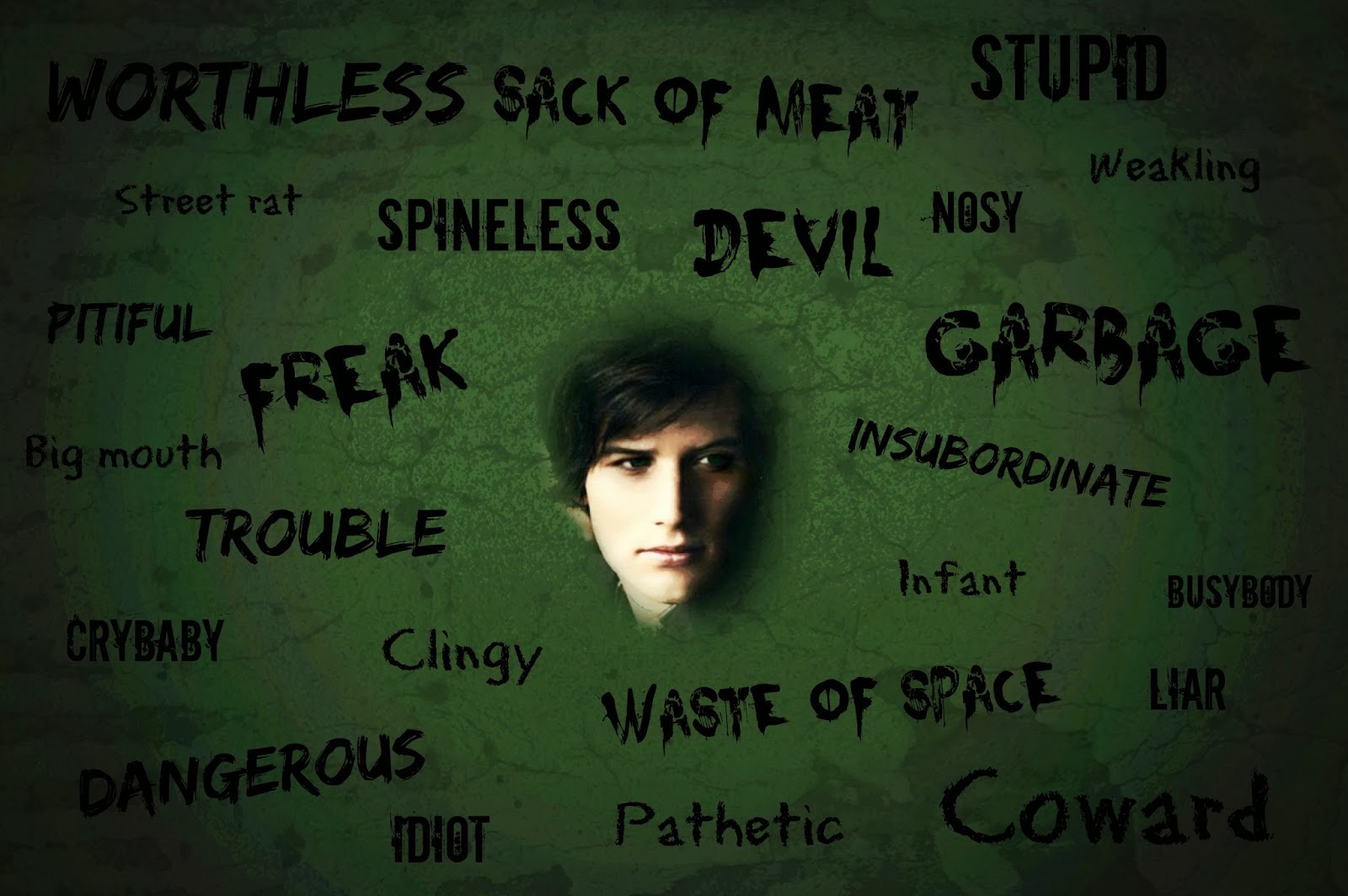
Anyways, an Insecurity Map is basically just a graphic I create that records negative things my characters think about themselves, as well as things others have said to or about them that have seeped into their minds and now influence the way they live their lives. 

(Disclaimer: I do not own the photos used in the maps. I retrieved most of them from Pinterest, and I claim no rights to them. I simply use them for private, non-commercial purposes in representing my characters.) 


Jorthen Lavahr ('The Sehret Chronicles', High Fantasy)


Shaetha Sohran ('The Sehret Chronicles')


Sohrem Terahl ('The Sehret Chronicles')


Val(erie) Richards ('Distorted Dimensions', Contemporary Sci-Fi)


Is this the most effective method for thinking up and visualizing characters' insecurities? I have no idea. But it does help me. I look at this big, empty page with my character's face in the center, and I think, "I have to fill this page with as many of their insecurities as possible." This forces me to really examine the darkest crevices of my characters' souls, to remember situations in their lives that might have influenced how they viewed themselves, and to lay it all out in a succinct way. It's also a plus if I can summarize each insecurity in one word or phrase. For some, I could only pull a quote from another character that evoked a basic sense of the insecurity the character in question possessed. For example, a character's map might include the quote, "Why can't you just leave well enough alone?" I have a basic sense of how this might affect my character's view of himself/herself, but it is difficult for me to sum it up in one word. So in those moments where I feel I cannot summarize without obscuring my meaning, I just throw in a quote that gives the general idea. The point is to figure out what your character thinks of himself/herself and make it into a visual. You could also do this for positive things they think about themselves, I suppose, but since insecurities run so deep and affect so many facets of a person's being, I chose to make maps for them first. 

So, how can you make one of these for yourself? Here are some basic instructions: 

For a digitally-generated map like those pictured above: 

1. Grab a background. This could be a normal photo, but that might be distracting. Your best bet is to grab some random photo (preferably high-resolution), take it over to a program like PicMonkey, and use the 'Canvas Color' effect to cover up the original photo with whatever color you think best represents your character. Or, you know, just black or white. Whatever works for you. 

2. Choose whether or not to include a photo of your character, and use the 'Overlay' effect to add them to the map. 

3. Start thinking. You might start with something as basic and shallow as 'Clumsy', 'Ugly', or 'Busybody', and work your way on to the deeper ones, such as 'Failure', 'Not good enough', or 'Toxic'. If you want, throw in quotes from other characters that have influenced your character, like, "You'll never amount to anything," "Why can't you be more like [insert name here]?", etc. Anything goes. This is your character -- take this time to get to know them. Open the gates to the storehouses of their deepest insecurities, and exploit their secrets. (Did I say that out loud?) 

4. Add whatever visual effects you desire to make the map look cooler. Or just leave it as it is. I personally like to make these things as visually appealing an personal to the character as possible. For example, I use their favorite colors as the background colors, and a character who loathes himself will have a darker-colored map than one who tries to think positively and copes more effectively with her insecurities. If you want the effects to change the look of the character's face or of the text, you'll need to merge the various layers so that they're all stuck in place and edited together. 

5. Save the map and store it somewhere for future reference. 

(P. S. DO NOT try to apply the 'Canvas Color' or an equivalent feature if you decide to change the color after you've already added text or pictures. It will cover everything you've done with whatever color you select. It's basically like taking a physical canvas and covering it in new paint. It's a blank slate, which you do not want to create after you've gone to the trouble of creating and tweaking this map. Instead, use 'Tint', and use the eraser on areas where you do not want to add the new color.) 

For a more basic, physical map: 

1. Take a piece of paper and write your character's name on it. 

2. Do the same as above -- start writing the first insecurities that come to mind for your character. Like I said, sometimes it's easiest to start with surface insecurities that are more obvious to others and work your way down to the ones only your character realizes, or maybe even that they've denied long enough to forget they have them. Another method may be to start with the deep ones that you already know and branch out into other deep ones, or swim up to the surface ones that bubble up from the deeper ones. It all depends upon how well you already know your character, and what starting point you prefer to use. 

3. Again, store this somewhere for future use. You might need to reference it later while looking for ways to torture -- er, develop your character's story arc. 

All seriousness aside, have fun with this, you guys. This is nowhere near a scientific method -- it's just a little exercise in getting to know your character, getting a feel for how they view themselves, and figuring out how their self-image might affect their thoughts, behaviors, and ultimately your plot. 

Hm. I wonder what would happen if someone made an Insecurity Map for the Doctor. What might be on it? What do you think? Pick your favorite fictional character and make an Insecurity Map for them. Use deduction if necessary. Look at what they do, what they say, and try to figure out what part of their self-image might have influenced those decisions. 

Huh. For once, I actually wrote a blog post that stayed pretty much on-topic. Mostly. But not entirely. I can never seem to do that. Even if I stick with the basic topic, I always digress from the original plan. Once I tried to write a guest post about the experience of writing a second book in a series, and ended up writing a post about the fear of failure. Yeah, that's just how my brain works. It's very random, and pretty much always has been. That's probably why I can never completely stick to a plot... 

But, as always... I digress.