Showing posts with label insecurities. Show all posts

Friday, March 9, 2018

An Open Letter to Those Who Have Failed

Today I'm writing to everyone who has experienced the sting of failure at something that mattered to them.

You had a goal, maybe one you set for yourself, maybe one assigned to you by an authority figure (a boss, a parent, a teacher), and you were determined to fulfill it to the best of your ability. You knew it would be tough, but you rolled up your sleeves, pushed into the fray, and gave it your all. You put in that overtime, you eliminated distractions, and you pushed past every obstacle that tried to get in your way.

You did your absolute best to ensure that the product of your labors was the pinnacle of perfection...

...and it wasn't. Your essay came back with an undesirable grade stamped at the top, your boss told you to scrap the project and start over (or even fired you), or you created something and put it out into the world only to discover that no-one enjoyed or got anything worthwhile out of it. And in that moment, when the adrenaline rush of having completed your task spiraled down into a sick feeling in the pit of your gut, you had this thought at the forefront of your mind: "I had one job, and I failed."

This letter is for you.


As with many of my posts (of which I know this is the first in a very long time), I'm writing this from a place of experience. As many of you know, in late 2016, I published the third book in my fantasy series, 'The Sehret Chronicles: The Survivor'. And then in 2017, I pulled it from the market and announced that I intended to rewrite it and publish the new edition at an undefined later date.

Those of you who know that much likely also know that at that point, I essentially dropped off the face of the earth as far as writing and blogging were concerned (though, let’s be honest – I’ve never been good at blogging on a regular schedule). What you might not know is why.

When I finished writing 'The Survivor', I faced a rather challenging situation -- where with previous books, I'd been able to recruit more objective third parties to help look over my work and point out problem areas/tell me when I needed to work on something, I faced what one might call a "beta famine". Others were willing to look the book over for me, but found their schedules too busy to allow them to get through the giant of a manuscript I'd sent to them (upwards of 140K words in its first draft form). No matter how many I asked, and how many (I'm sure) fully intended to be of help, I got hardly any feedback, and my self-imposed deadline for publishing the book I'd spent three years writing and editing loomed menacingly.

I had to make a choice -- push back the deadline until I could get more substantial, objective feedback (probably the most sensible option), or rip into the manuscript based on my own judgment and what little input I'd managed to glean from others and publish the book "on time".

And I made what was admittedly a rash and incredibly risky call: I chose the second option. I combed through the book, chopped scenes relentlessly, tuned up as much as I could, and with much terror and stomach-twisting, I uploaded the manuscript and hit 'Publish'.

And it tanked. I mean absolutely, spectacularly TANKED.

This could have been partially due to my subpar self-marketing skills, but I largely blame myself for failing to hold out for better feedback and rushing to publish something that clearly was not ready to be released into the world. Beyond mere low sales figures, the only reviews I got on the book cited a plot in shambles, characters who didn't seem like themselves, and a message that was confusing and, in some places, actually disheartening.

When the first review came in and pointed out these glaring issues, I went to my parents' room in the middle of the night (yup, I'm a low-energy Lymie and still live at home), told my mom about the review, and cried my eyes out. My depression/anxiety/OCD/etc. kicked into overdrive, and my headspace got unspeakably dark. This was my primary method of ministry, of contributing to a world I was rarely able to reach otherwise, and instead of helping my target audience, I'd produced something disappointing and potentially discouraging. I wanted to pull the book right then and never publish anything ever again.

But years of talking to other indie authors have taught me that sometimes a few one- or two-star reviews are mere flukes, and that you shouldn't act on them unless they become a trend. I did not feel the review was malicious or even necessarily incorrect (I take reviews very seriously, especially when I can tell the reader is sincere), but as it was only one, I made the decision to leave the book on the market for a while and see what happened.

And then it came -- the second, lengthy and painstakingly detailed review, relating not only every single thing that I'd felt insecure about during the process of writing and editing the manuscript, but also concerns for aspects of the story with which I had been happy, or felt I'd done well for once. And I cried again. My stomach roiled. I felt like I'd failed utterly, like I could never recover from having thrown so much time and effort and passion into a project for three years of my life and produced a result as catastrophic as this.

This left me with a decision. From my perspective, I could have done one of four things:

1. Left the book on the market, accepted that it was the "black sheep" of the series, and tried to make up for my mistakes with the next installment,
2. Take it off the market and pretend it never existed, either proceeding with a new, completely different book or just leaving the series as-is,
3. Take it off the market and never publish anything again (something I seriously considered more than once), or
4. Take it off the market and try again.

After consulting trusted sources close to me (including an old writing buddy who was invaluable in providing feedback for the first two books), I chose the fourth option. I swallowed my pride (most of it, anyway), unpublished 'The Survivor', and posted my apology to the world, along with the promise that I would undergo a rewrite, and requested prayer, as I'd never done something this drastic before and knew that I would struggle once the euphoria of having a second chance wore off. (It was stressful having something on the market that I felt might not be good enough, and I gleaned some measure of relief from the knowledge that it wasn’t available to potential readers anymore.)

It's been seven months since I made that announcement, and the manuscript for said rewrite is still at... *checks current word count in Scrivener* ...6,587 words.

Yup, you read that correctly -- seven months, and the current version of the rewrite doesn't even contain a thousand words per each month I've been working on it. Granted, this is partially because I've made several attempts and, upon being unhappy with some of them, pulled scenes that would have added onto my measly word count. In any case, rewriting this book has been possibly (I daresay almost certainly) the most difficult thing I've ever done as a writer.

Why? Because every time I open that document or someone asks what I'm working on lately, I'm reminded that the whole reason I'm still working on this book is because I failed. As even one of the aforementioned reviewers acknowledged, I threw my heart and soul into the project and tried my best to make it everything it could and should have been, but still it flopped profoundly.

So every time I try to get back to work and make progress towards what I hope will be a better and more worthwhile result, it feels like I have someone leaning over my shoulder, continually whispering, "You failed. You failed at this once, and you'll fail at it again. You are a failure."

But I’d like to draw your attention to an important element of this post’s title: It is addressed to “Those Who Have Failed”, not to “Those Who Are Failures”.

It is crucial to draw a distinction between the two, and to understand that failing and being a failure as a person are two entirely different things. Everyone fails at something eventually, and while the consequences vary in their nature and severity, we (and especially the perfectionists among us) can all relate to the crushing discouragement that follows, and thus may glean much from the following one-liner that you’ve probably heard a million times:

“If at first you don’t succeed, try, try again.”

But why should we “try, try again” when another attempt brings with it the potential to fail again? Would it not be safer to give up, to run up the white flag of surrender and save ourselves the heartache? Why should I put in another several months/years into rewriting a book from scratch when it brought me such agony last time despite everything I put into it?

As to the question of whether it would be “safer”, I would have to say that yes, from the perspective of a fearful human being, the idea of holding back from attempting something (especially something at which you've previously failed) would feel safer. After all, it's difficult to make the same mistake twice if you never make a second attempt at the pursuit in which the mistake was first made. 

To the question of whether it would be better, though, my answer would have to be… maybe not.

The reason I say “maybe” instead of “definitely” is because sometimes there are things we are truly not meant to do, either because they are not worthwhile pursuits or because they’re simply not part of God’s plan for us. So the first step following any failure should be to ask ourselves (and, more importantly, God) whether what we failed in doing is something we are meant to do.

If the answer is no, the next step should be to let go – there’s no point to continuing in something that wasn’t meant for you, and neither is there anything to be gained by holding onto guilt and regret over falling short in the pursuit of something that you weren’t meant to achieve. It’s okay. You’re allowed to not excel at some things, and you’re certainly allowed (and I would encourage you) to step away if you feel that what you are pursuing is getting in the way of something more important. God is the ultimate giver of second chances, and you can always seek Him and pursue His will anew, even if you find you've strayed from it before now. 

If the answer is yes, then that’s when you really need to buckle down and get brave. Because with every new beginning, there is risk. There is the potential for stress and failure and heartache, and there’s no way of knowing what lies on the road between where you begin and where you’re trying to go.

But is the risk of embarrassment or a temporary emotional low really worth turning away from something God has set before you to do?

This is where my answer has to be a resounding NO. And let me tell you why.

First off, if you’ve already consulted God (through prayer, the Bible, and the input of godly advisors) and determined that the seemingly failed pursuit is one you’re meant to undertake, nothing else matters. Nothing. Not fear, not shame, not any insecurities you might have (remember, Moses had speech difficulties and thought he wasn’t worthy of speaking on God’s behalf because of it). If God has set you on a path, He has a purpose for it, whether you see it or not, and He will bring you through it, no matter how many times you think you’ve faltered or even fallen along the way.


“Being confident of this very thing, that he which hath begun a good work in you will perform it until the day of Jesus Christ.”

- Philippians 1:6, KJV


"Trust in the Lord with all thine heart; and lean not unto thine own understanding.

In all thy ways acknowledge him, and he shall direct thy paths."

- Proverbs 3:5-6, KJV


Second, if what you’re doing is for God and backed by His will, you can bet that any doubts and fears that might arise are not from Him. After all, if God is with you in your pursuits, then who are you doubting when you think things like, “I can’t do this”? It would be understandable to doubt yourself, as a fallible human being, especially when the Bible explicitly says that “without [God], ye can do nothing” (John 15:5, KJV). But if you’re doing God’s will and leaning on Him for the strength to follow through, then to doubt your future is to doubt Him. And that is an entirely different matter.

If we truly trust in God to direct our paths, we have no reason to fear, because He knows the way and is infinitely capable of getting us to the end of the road, regardless of our own inadequacies.


“For God hath not given us the spirit of fear; but of power, and of love, and of a sound mind.

Be not thou therefore ashamed of the testimony of our Lord, nor of me his prisoner: but be thou partaker of the afflictions of the gospel according to the power of God;

Who hath saved us, and called us with an holy calling, not according to our works, but according to his own purpose and grace, which was given us in Christ Jesus before the world began.”

- 2 Timothy 1:7-9, KJV

Third and finally, anything done for God is done with eternal benefits in mind, and thus, continuing in a difficult task when God is in it will ALWAYS be better and more worthwhile than anything we might lose in the process (time, energy, comfort, pride, etc.), and is certainly well worth the risk. 

This is why, despite how atrociously behind I am in my writing goals, no matter how badly I feel about myself as a writer or how much I would like to throw in the towel and give up trying, I refuse to give up. This is not out of pride or stubbornness (although I'd be lying if I said those never play a role in my decisions or my resolve), but rather because I believe God has set this task before me, and even if I failed the first time, I have to believe there was some purpose to my efforts (even if it was just to teach me a lesson -- for example, not to rush to publication like that again), and that what God has in store for me is worth pursuing. Because while I may have failed, and may often think of myself as a failure, God is not and has not, and I can trust Him to do His will through me regardless. 

I just have to press on, keep a stiff upper lip, and trust that the infallible God I serve will use even my stumbling efforts to His glory. 

If God is in what you're doing, then even your failures (crushing as they may seem at the moment) will lead to a greater victory in Him. This is our hope and our promise in the face of even the most devastating failure. 

Brethren, I count not myself to have apprehended: but this one thing I do, forgetting those things which are behind, and reaching forth unto those things which are before,

I press toward the mark for the prize of the high calling of God in Christ Jesus.

Let us therefore, as many as be perfect, be thus minded: and if in any thing ye be otherwise minded, God shall reveal even this unto you.

Nevertheless, whereto we have already attained, let us walk by the same rule, let us mind the same thing.”

- Philippians 3:13-16, KJV


Rejoice in the Lord (a cappella) - Hamilton Family

Saturday, February 27, 2016

Why I Fear Being A Role Model

It was a day like any other -- I was at home, going about my business, and struck up a conversation with a friend on Facebook (the main place where I, a chronically ill hermit, get my socialization fix). I don't remember exactly what we were talking about. But I do remember the conversation digressing into MBTI discussion and jokes. My friend mentioned a habit she'd begun to develop, and I made a joke along the lines of, "Uh-oh -- you're turning into me." The gist of her response was, "I could do worse -- you're a pretty good person to aspire to be like."

I blinked at the screen, stared at her words for a few seconds, then rattled off a joke to change the subject. Her words echoed through my mind, and I had no idea what to do with them. Me, someone people would want to be like? A role model?

No. Obviously she was just being nice. And of course, I tossed around the seemingly rhetorical question in my mind: "Why would anyone want to be like me?"


So here's one of the most basic facts you need to know about me: I am not perfect. Nobody is, right? But somehow, the idea of having someone -- especially a younger person who's still figuring themselves out -- look to me as an example of how to behave is terrifying. I mean, how do you even do that? As the fourth-born child out of five and the youngest girl, I never felt much pressure to be an example for anyone. (Firstborn children, my cap is off to you for getting through life with the myriad of expectations placed upon you just because you happened to be born before any of your siblings.)

But I mean I am really not perfect. At least from my own perspective, I have a lot of flaws, some of which I'm on the road to conquering, others not so much. In fact, it seems like the longer I live and interact with others, the more aware and self-conscious I become about my own shortcomings. Having a few invisible physical and mental illnesses only compounds this. Because here's the deal -- I am literally brain-damaged. Not in the sense that I got in a car crash and bashed my head against something or anything like that, but because since I was in high school I have had parasites crawling through my body, burrowing in and eating away at whatever they found. And part of what they found was my brain and nervous system. As a result, even though they're clearing out of my blood bit by bit, I'm still left with a flaky brain and a tendency to be less than normal in my behavior (not that I ever really was in the first place). Depression saps my motivation. Anxiety paralyzes me and compels me to run into the arms of the many sources of procrastination which I've discovered. And brain fog sees to it that, on those rare occasions when I have both the motivation and the confidence to work, every word written or edited is... is, um... What was I going to say, again?

Oh, right. It's a struggle. That's what I was going to say. Except I was going to use much better words and some kind of original metaphor to make myself sound clever.

Anyways, you probably get the picture by now. Whatever flaws I might have had as a "normal" person are exacerbated (though not caused) by all the stuff going on in my brain and the rest of my body. Where I might have once been a little nervous about sending someone a message after extensive silence between us, now I tend to avoid conversations altogether just so I won't have to deal with my brain saying, "But what if they don't want to talk to you? What if they want to talk to you but you're not interesting enough? No, don't say that or they'll think -- uggggghhhhh, why on earth did you say that? That was the stupidest possible way to answer that question. Just close the chat window and run away to watch Netflix with me and never try to talk to people again." Where I might have been a little flustered to see that someone challenged my strongly held belief (oh, woe of all woes), now I panic and have to resist the urge not to lash out or dissolve into tears over the perceived rejection of my point of view.

In fact, if I were to believe everything my addled brain tells me in an average day, I would believe myself to be the:

1. Least reliable
2. Most irrational
3. Laziest
4. Most cowardly
5. Most ignorant
6. Least interesting
7. Most awkward
8. Most annoying
9. Clingiest
10. Most paranoid
11. Most temperamental

...person in the world.

So why, out of all the ~7 billion people on this planet, would anyone choose to look at me and want to model their lives and behavior after mine?

I have no idea how many people out there actually look up to me and how many just say so to be nice. I don't know what I look like from the outside, any more than most of the people I meet know how I see myself from the inside. The truth is, most -- if not all -- of us are our own harshest critics. It's easy to look at someone you admire and think, "Wow, they've really got their lives together," because they have a nicer car than you, a larger group of friends, or a Bible that's a lot more heavily highlighted than yours.

But I don't live inside your head. I don't know what thoughts cross your mind as you roll out of bed in the morning, what you notice first when you appraise yourself in the mirror. I don't know whether your comfort in social situations is natural or whether you're just really good at faking it. For all I know, if I compared my list of my own perceived flaws with the one you've made for yourself, yours might be just as long or even longer.

And yet if neither of us ever took a gander at the other's list, we would never know. We would probably just hide our lists behind our backs, smile and laugh pleasantly, and pretend we never felt insecure about anything in our lives.

And most likely, we would believe each other. Because even as we're aware that everyone is human and you should never judge a book by its cover, still we do it every day.

In fact, I believe this happens a lot, especially in this digital age where nearly everyone is on various social networks, posting and tweeting and snapchatting all the most interesting parts of their lives to everyone else. We spend ages searching for the perfect profile photo, then touch it up a little just to make ourselves look a little better and more put together. We take a few extra moments before posting our statuses to make sure everything is worded in a way that will make us look as clever, spiritual, funny, [insert preferred descriptor here] as possible. Everything gets filtered through our own ideas about what people like or don't like about us and what we could do or say to make them like us more. And the more we use that filter, the more impressive we appear, and the less our insecurities show through to anyone observing us.

This phenomenon also occurs in face-to-face interactions, though, not just online. Isn't it only human, after all, to want to be the best version of yourself that you can be? And if you can't be perfect, you might as well try to make others think you are, right?

But no-one is perfect. We all come with our own baggage, our own insecurities about who we are, what we are, and how other people view us. Listen, it doesn't matter how amazing and confident and put-together someone looks on the outside -- everyone, from your next-door-neighbor to the guy sleeping on a park bench to the celebrity whose face you have as your phone's wallpaper, has insecurities. Their life might seem perfect, but they have bad days, too. They just might not air them out for everyone else to see, or if those days do come to light, it usually wasn't their desire to allow that.

That's a big part of why the idea of being a celebrity is frankly terrifying to me. Because you get little to no privacy. As a living, breathing human being with a beating heart and a brain capable of forming thoughts and emotions, you have insecurities just like everyone else. The difference is that, when you're a celebrity, everyone is watching you. Everyone expects you to be perfect, and they're constantly looking to you for inspiration on everything from their hairstyles and clothing to getting ahead in their careers and having the best relationships possible.

And if you fall short of their expectations, everyone is disappointed. Everyone looks at you and shakes their head and says, "How could you? You aren't supposed to mess up like that. You're a role model -- you should know better."

And right there, that is why the idea of being anyone's role model scares me. Because I'm not perfect. I'm not even good at pretending to be perfect. The closest thing I can do is to try and behave as normally and respectably as possible and apologize when I mess up, hoping beyond hope that everyone will forgive me when I inevitably slip up and disappoint or hurt them in some way.

Because it happens. Always. The people who love me unconditionally stick with me anyways no matter how much I let them down, but that doesn't mean I never do anything that falls short of their expectations for my behavior. I can't help it. I am human, and I am flawed, and no-one is more aware of this fact than I am.

Well, I suppose there is one person -- the only perfect person who has ever lived or ever will live.

You know where I'm going with this, don't you? The only perfect human ever to walk the face of the earth since the first humans committed their original sin is Jesus Christ. He was fully human, but was -- and is -- also fully God. God knows everything and everyone. And on top of that, you know what I went and did when I was a kid? I asked Him to come into my life and pay the price for all my sins and stupid mistakes, to work in me and make up for the imperfection that has always been a part of me. So I don't even get the luxury of pretending that no-one knows what I've done or what makes me feel insecure, because He's right there in my heart (figuratively speaking), and He's around all the time, nudging me when I'm headed the wrong way, and waiting patiently for me to come back to Him when I disregard His directions and take the crooked path anyways. He's so thoroughly perfect and patient and all the things that I am not, and just thinking about it makes me a little weak in the knees, because how am I ever supposed to match up to that?

Here's the simple answer: I'm not. Well, of course He wants me to try. But I will fail, because I am human, because I am me, and anyone looking to be exactly like me in every way will either fail in the same ways or be disillusioned when they see me stumble. Anything good they see in me is not really mine, but rather is the result of Jesus standing with me, holding me up when I'm weak, telling me which way to go when I feel thoroughly lost.

But maybe that's been the point all along. Maybe it's not about what people see in me so much as it's about what they see through me. I fall short of perfection daily (strike that -- multiple times a day), but Jesus is still with me, and even when I don't see it or try to forget it, He's shaping me and the course of my life to accomplish His purpose, even when I'm not being particularly cooperative about it. He works all things together for good, even my laundry list of flaws and insecurities that I try so desperately to hide behind my back.

Well, I'm airing a few of them now. And my desire is that when you see me open up about my life and some of the areas where I fall short, you aren't disillusioned by my broken nature. Instead, I want people to look at me and see Christ's light shining through all the dark cracks in my soul that mark me as the damaged creature that I am.

Because that's the gist of it, digressors. Jesus is the ultimate role model, the one person worth emulating in His entirety. If you see Christ-like attributes in people you know, by all means strive to adopt them, but not because a fallible human possesses them. Rather, do it because what you see in them reflects Jesus and His pure perfection. Lift the weary when they fall, not because a celebrity you like helped that one person one time, but because "what you do unto the least of these, you do unto Me." (Matthew 25:40) Be "merciful and gracious, slow to anger and plenteous in mercy" (Psalm 103:8), not merely because your one friend has a skill for it, but because that's how Jesus is and how He wants you to be. Be honest and sincere, and "whatsoever you do, do it heartily, as doing it unto the Lord, and not unto men" (Colossians 3:23), because this isn't about other people, right? It's about Jesus and trying to emulate Him, in recognition of the fact that He has never failed and never will.

Will it be easy? Probably not. Will you mess up? Most definitely.

But in this way, when someone does choose you as a role model (because let's face it, even though you're not perfect, God designed you to be pretty amazing and someone out there is bound to recognize it), they won't just see your mistakes or some front you've put up to make yourself look good. They'll see your imperfections, true, but they'll also see how God uses those imperfections to bless others around you, and that will encourage them to go to the source, to the ultimate role model you so openly emulate.

This is, ultimately, my goal. It might seem incongruous, but as proud as I am, as strong as the instinct may be to stuff all my imperfections into a trunk and shove it into the back of a closet somewhere, ultimately I hope people understand just how imperfect I am. I hope they see that I have...

1. Bad days (but He gets me through them)
2. Insecurities (but He works through me anyways)
3. Temptations (but He always offers a way out and forgives me when I fail)
4. Bad habits (but He motivates me to attempt change, even if it's a slow, bumpy process)
5. Fears (but He gives me courage)
6. Weaknesses (but He gives me strength)
7. Misgivings (but He encourages me to forgive)
8. Doubts (but He gives clarity)

...and that if they consider me to be any kind of role model, it's really not me they're seeing. It's my Savior and the continual work He is doing in me (and in those around me) to make me more like Himself and show His love and goodness to those around me.

And, dear digressor, if He can work through me, an overly emotional, depressed, anxious, bitter, often disturbed human being... what might He do through you?


"I am crucified with Christ:
nevertheless I live; yet not I,
but Christ liveth in me;
and the life which I now live in the flesh
I live by the faith of the Son of God
who loved me,
and gave Himself for me."

Galatians 2:20 (KJV)

Friday, May 1, 2015

An Open Letter to Those Who Feel Left Behind

(Hey, fellow digressors -- I'm alive! I bet you were starting to wonder, huh? I've actually had this post mostly written for a while, but I'm only posting it now. Sorry about that. Just so you know, I do intend to address the short story situation, as well. And I'm sorry if the formatting is off; I'm using the Blogger app on my phone. That will probably drive me crazy until I can get to my laptop and fix it. Sorry, OCD/OCPD people; I never meant to cause you pain... *ahem* But I digress. 

[UPDATE: I fixed it! Yay! ...I shall let you read now.]) 

You're not sure when it started, exactly. Life was normal -- even if it wasn't always perfect, it was fairly predictable. Then something started to change. Maybe a friend moved to a different state or went off to college. Maybe a sibling went off and got married. Maybe you were diagnosed with a long-term illness. Whatever it was, when it came, you thought you would learn to deal with it. You and that friend would keep in touch often, the sibling would meet with you for lunch once a week, and all your friends assured you that your illness would not change anything between you. You exchanged e-mail addresses, agreed upon an ideal day of the week on which to meet, and started treatment for that illness, confident (or at least hopeful) that things would return to normal soon. 

But sometime between then and now, something has shifted. You no longer feel the security you once did. You don't hear as much from that friend or that sibling, or you find yourself incapable of fulfilling what most people consider to be basic tasks. Oh, sure, all around you life goes on. But somehow you just don't feel like you're part of it. You've begun to feel disconnected from your friend or sibling, or you feel stuck in a rut of lying in bed all day while everyone else works, goes to school, gets married, or just keeps chugging away at [insert ideal "normal activity" here]

And here you are, standing (or sitting, or lying) right where you were when it all started, stuck. Fading into the background. Left behind. 

This letter is for you. 


On August 28th, 2012, I rode with my mom to a doctor's appointment. In my lap, I held a notebook, and on my way to see the doctor, I scribbled all the symptoms I could think of that had plagued me for the past couple of years. I can remember a few of the items now: Fatigue. Brain fog. Memory problems. Arthritis. Muscle aches. Depression. Sensitivity to light. The list went on. Part of me thought it was ridiculous, that at least some of these symptoms had to be in my head. There were too many, and no-one had fully explained them. 

Well, I supposed, someone had. Upon describing some of my symptoms to a friend, they asked if we had investigated the possibility of Lyme Disease. Being a chronic Lymie herself, she was well-acquainted with the disease and even knew who we could visit to get it tested. By then, I had been through several tests, most of them involving blood work, one of them involving electrodes stuck to my chest for a day to measure my heartrate. Although this physician was fairly new to us, we figured that we might as well visit him and try to get some answers. And anyways, his blood tests only involved a prick of the finger rather than a needle stuck into the arm, and for me, the less invasive the needle, the better. (Needles. Blech. I can't even type the word without shuddering.) 

So we walked into the small practice where the doctor worked, and I held tight to the list of things that had plagued me over the recent months and years (more specifically, the past year and a half). We walked into his office and sat down, asked our questions, and I handed my lengthy list over to him. I remember that he told me the list was consistent with Lyme, but of course he would have to check my blood to make sure. I held out my hand, and he pricked my finger and smeared a drop of blood onto a glass slide. I had to look away, of course. I've never been good with blood. 

As you've probably figured out by now, it wasn't a normal test, where you take vials of blood and ship them off to a lab and test for a hundred different strands of disease. This was much simpler. You take the blood and put it under a dark field microscope, and then observe the cell activity and look for parasites. (And believe me, it is effective. It's just different, is all.) The doctor took a look, then switched on a small television set connected to the microscope, indicated all the telltale signs in the bloodstream, and confirmed our suspicions. 

I had Lyme Disease. And by his estimation (combined with our own accounts of when my symptoms had become noticeable), I'd had it for about a year and a half already without treatment. So not only did I have Lyme, but it was late-stage, chronic, and had gotten into my brain and nervous system, wreaking havoc there. 

Strangely, when I got the diagnosis, I did not panic. I did not cry. I did not even wonder much about how this might impact my life in the near future. I just thanked the doctor, went to the car with Mom, and while she stepped into a grocery store, I sat in the car and vented my thoughts and feelings into a document on my iPad as I came to terms with my new identity: 

"I have Lyme disease.
I have been diagnosed with Lyme disease.
I am a Lyme patient.
I am a Lyme sufferer.
I know what's wrong with me.
I know why I've been sick for the past two years.
I know why I've had to quit karate.
I know why my peanut allergy has become life-threatening.
I know why dairy makes my stomach upset, and gluten makes my head heavy.
I know why I'm depressed.
I know why my liver is on the verge of collapse.
It's not my fault.
I have Lyme disease.
I know why a debilitating fatigue sometimes sweeps over me, making it impossible to work.
I know why I'm always sick.
I know the name of my disease, the name of my tormentor.
I have answers.
I have closure.
I have peace.
I have Lyme disease."

In my eyes, at that moment, everything was a little brighter. Sure, I was sick, but we would soon make the illness go away, and I could return to life as normal. I would keep going to church and drama ministry group, and soon I would be able to help around the house again without ending up on the couch. People would look at me no differently from before, and within a few months, I would be normal again. 

Two and a half years later, still Lyme-ridden and depressed, anxious, foggy, etc., I've begun to feel stuck. I'll admit it. Yes, when I really think about it, I can point to ways that my illness has blessed me even as I've suffered from it. It's mellowed me, made me care more, and forced me to slow down and take things one day at a time. It's given me no option but to trust God with all that I have and am, and it's taught me to reach out to others and not wallow in my own problems (though I can't say I always succeed in this). 

But I am not perfect. I am human. I have a mind that likes to twist everything and make me feel all the things that are least helpful to my recovery or to my ability to serve God. I have a body that gives out on me randomly and nerves that wreak havoc with my ability to function in public or even sometimes at home. I smile to the world, while inside I'm just hoping and praying that soon I will find relief. I walk into stores, and people stare at my cane, then look away when they realize I've seen them. I throw myself into helping with a project, then try to avoid people's frustrated gazes when five minutes later I have to retreat to my room to collapse. I tell others to hold on and find hope in God, while inwardly I'm screaming and pleading with God to give me even a glimmer of that hope which I pray I've been able to pass on to others. 

Oftentimes, I feel alone. I feel scared and tired and hopeless. Sometimes I stare at my bottles of supplements and just think, "Why am I still taking these? I've been taking them for years, and I'm still sick. It's still costing my family money. What's the point?" 

And when my mind takes that turn, it also likes to dwell upon all the things I haven't done. I wanted to go to college. I'm too sick to go and probably wouldn't have the necessary concentration, either, even if my treatments hadn't made finances complicated. I pictured myself as a stay-at-home mom. I guess at this point I'm open to marriage, but since I'm almost never out in public, I've sort of accepted that men are unlikely to notice me (not that this is an entirely bad thing; being single leaves a lot of opportunities open), and I'm not sure I'd be able-bodied enough to keep up with the responsibilities involved in having my own household, much less in having and caring for kids. I want to get a job and be able to contribute to the family finances so I don't feel like a freeloader. Well, I do have a job, but it's not all that lucrative, and since it's basically freelance work, it's not all that regular of a paycheck, either. 

And then I look around me at all the people who are moving on with their lives and doing all these great things for God and others, and I feel left out. I feel invisible. 

I feel very left behind. 

Maybe you've been there. Maybe you still are there, and it hurts. You wish you didn't feel this way. You see others in situations worse than yours and feel like a whiner if you so much as open your mouth about your own problems. Part of you knows and understands that not everyone does life at the same pace and that it's fine for others to move on with their lives while yours is apparently in intermission. 

But then there's another part of you that wants to run after everyone and yell, "Stop! Wait for me! I don't want to be left out anymore!" 

I guess what Theodore Roosevelt said is true: "Comparison is the thief of joy." 

I know it's hard not to compare our lives to others' when we feel stuck and miserable, but it really gets us nowhere. For me, it just makes my depression worse and makes me want to try less. 

But for me, at least, at the heart of all this comparison is not necessarily jealousy or anger, though those do play their roles. For me, it's more that I feel like everyone else is doing what they're supposed to be doing, and I am somehow inadequate. I should be moving on and pushing through all my difficulties. Yes, I try to serve God where I am in the ways I can manage, but some part of me feels like that doesn't matter when I can't keep up with the everyday stuff that everyone else is doing. 

Okay. Let's stop right there. Enough of my pity party. What does the Bible have to say about this? 

"For all things are for your sakes, that the abundant grace might through the thanksgiving of many redound to the glory of God. 

For which cause we faint not; but though our outer man perish, yet the inward man is renewed day by day. 

For our light affliction, which is but for a moment, worketh for us a far more exceeding and eternal weight of glory; 

While we look not at the things which are seen, but at the things which are not seen: for the things which are seen are temporal; but the things which are not seen are eternal." 

- 2 Corinthians 4:15-18 

Sometimes life is hard. Crazily hard. Unbearably so. Sometimes people get busy, health declines, and things start to look bleak. Sometimes you find yourself standing on the tracks, staring after the train of life as it pulls out of the station, and wonder why you didn't catch it in time. But God will make a way. Even if that way means trudging through the wilderness with sweat pouring from your brow, and even if no-one else you know takes exactly the same route or shares in your struggles, God will be there to help you keep moving at the proper pace (not the one everyone else is keeping), and He will give you rest when you finally reach the destination He has ordained for you. Maybe you can't see it now, but remember: Things are always harder to see clearly from a distance. When you get there, it will all become clear, and the struggle will be worth it. 

Recently I discussed marriage and parenthood with my mom, and expressed to her how unnerved I was by the idea of enduring childbirth. I mean, yeah, if I do get married, kids would be nice, but there has to be a reason why mothers scream and cry and curse the day they met their husbands as they bring their children into the world. She told me (not word-for-word, because I have a terrible memory), "When the labor is over, and they lay this cute little baby in your arms, and you realize that it came from you and your husband, the pain is left behind, and you wouldn't trade a moment of it for the world." 

So next time life gets hard and you feel left behind, just hang on and keep pressing forward. Don't worry about the pace; you'll get there eventually. You may not like where you are right now, but with God's help, you will reach your destination, and never again will you be left behind. 

Wednesday, January 7, 2015

Scribely How-To: Insecurity Maps

Hello, fellow digressors. Welcome to 2015! How have your first few days with the new resolutions been? Have you written the wrong date on very many checks yet? Myself, I've made a longer list of goals than I did for any previous year, and I expect to keep maybe half of them. Maybe. You know me -- I get distracted. There are too many shiny things in this world to have complete focus 100% of the time. 

Anyways, this post was requested a month or two back by some writer friends on Facebook, and I'm finally getting around to writing it. As any writer knows, or figures out eventually, good character development is key to writing a good story. You can have a fascinating premise, a plot so twisted it looks like a big soft-serve pretzel that the dog mangled, and the writing skills of the most popular author in the world, but if your characters are flat, you're probably doomed. I'm sure there are exceptions, but in general, this holds true. 

Why is this? Well, let me see what reasons I can think of off the top of my head: 

1. If your reader doesn't care about your main character, why should they care about anything that happens to them? If the character is hit by a car, or their mother is kidnapped, or their dog dies, why does it matter? (Well, okay, everyone will always be sad if a dog dies. Bad example.) If they're not rooting for (or against) someone, they have no reason to care about anything that happens. 

2. If your reader cannot connect with your characters, they will not connect to your story. My most effective marketing strategy has been a strange one -- in Go Teen Writers and other online circles, I will let my characters interrupt me in comment threads, I will talk about them, I will post quotes from them and discuss their quirks and deepest insecurities with other group members. People get to meet my characters, they grow to love them for their sense of humor, their intriguing backstory, or their habit of tripping over everything that crosses their path, and they say, "Hey, I love this character -- I want to read their story now." I don't even have to talk much about my ingenious (or dry) plots, my wordcraft, or anything else. People connect with the characters, and because of that, they connect (or want to connect) with my stories. It makes sense, really. While you read a book, most of the fun involved comes from hanging out with these characters, with living vicariously through them and rooting for them no matter what the plot throws their way. People may forgive a simple plot, a slightly cliched premise, or a less than dazzling writing style, provided they love the characters. To me, at least, the characters are what make or break a book. Everything else is secondary. If your characters are unrelatable or boring, you'll lose me pretty early on in the book. Make them interesting, and I'll be willing to trudge through a few more chapters of less than thrilling prose just to spend some more time with them. 

3. Characters drive the plot. Now, the extent to which they do this will vary between stories. But ultimately, the book is driven by your main character's wants, fears, and deepest desires. A plot is only interesting if what happens in it matters to your main character/s. If they don't care, then your reader won't care, either, or else they'll find your character unrealistic or incongruous and not want to keep reading. Since, as stated above, half the fun of reading a book is that you get to live vicariously through the characters, what they feel is important. What they believe and how things affect them is important. If things don't affect them, they will seem inessential or detached, and that can be detrimental to your story. 

Okay, I can only think of those three points right now, but suffice it to say, character development is extremely important. I might even go so far as to say that it's the most important part of the writing process. Think about your favorite book -- what was the plot? What verb tense did the author use? What was the message of the book? You'll probably remember most, if not all, of these. But what was it that made you love the book in the early days, when you first started reading it? Chances are that you connected with the characters, related to them in some way, or at least were intrigued by them. For many people, 'The Hunger Games' was interesting because of Katniss, because of her humanity and the struggles she overcomes throughout the series. People love 'The Hobbit' because of Bilbo Baggins and how, even as an ordinary hobbit who claims not to want any part in adventures, he goes so far out of his comfort zone and grows as a person throughout the experience. People love the characters, and so they love following their adventures. Add in a great premise, a plot that keeps you guessing, and some killer writing (literally or otherwise), and you've got the potential for a bestseller. 

SO. Now that I've proven how much of a digressor I really am, I'll get to the original topic of this post: Insecurity Maps. 

This was an idea I had recently, while thinking about one of my main characters' insecurities. It occurred to me that, while people knew about his occupation, his personality, and what other people thought of him, what he thought of himself was equally important. How a person views himself affects everything he thinks or does. A man who thinks himself very important will be more likely to assume that what he says is valid and as important as he is, and will be less likely to take the advice of others whom he deems less important than himself. On the other hand, a man who thinks of himself as worthless or beneath the notice of others might be likely to either draw less attention to himself, or to overcompensate by trying to make himself seem more important than he really is or to make himself feel more important. But at the core of it all will be his insecurities, his longing to be worthy of notice, and his belief that he never will achieve that level of worth. Because of these insecurities, he might either reject flattery because he thinks so little of himself, or accept it because it makes him feel important, depending on his personality. He may become either depressed or disproportionately angry when someone insults him, but he is unlikely to be completely unaffected, where someone with a high sense of self-importance will likely disregard the criticism because he does not think it is true. Personality influences the reaction, but insecurities affect the expression of personality. 

Say someone is extroverted, but has a deep-seated feeling of being a joke to the opposite sex. They may appear confident to others, and converse with people of their own gender very easily, but when confronted by someone of the opposite sex, they will become uncomfortable. There may be many possible reactions to this, but they will all be based upon your character's discomfort and their desire to mask or get rid of that discomfort. 

Insecurities run deep, and affect everything we do. Think about it. What's a deep-seated insecurity you've held for a long time? How much has it influenced your thinking and the way you've interacted with the world? I'd be willing to wager that it's had at least a moderate influence over you at some point in your life. I personally spent my high school years feeling as though I was beneath the notice of others, so I withdrew from them and found lots of little distractions to occupy me without interacting with people. Had I not been so insecure, I might have had more of a social life, and might not have gotten into writing or sketching or music as much as I have. The bottom line is, we all have insecurities, and most insecurities can be a significant influence on our choices in life and how our personalities develop. 

So along with your character's personality, their positive or negative traits, or their upbringings, their insecurities are vital to understanding them and making them real to the reader. I personally cannot connect to characters who are never insecure about anything. They feel too "perfect," almost inhuman, because to be human is to be insecure about something. 

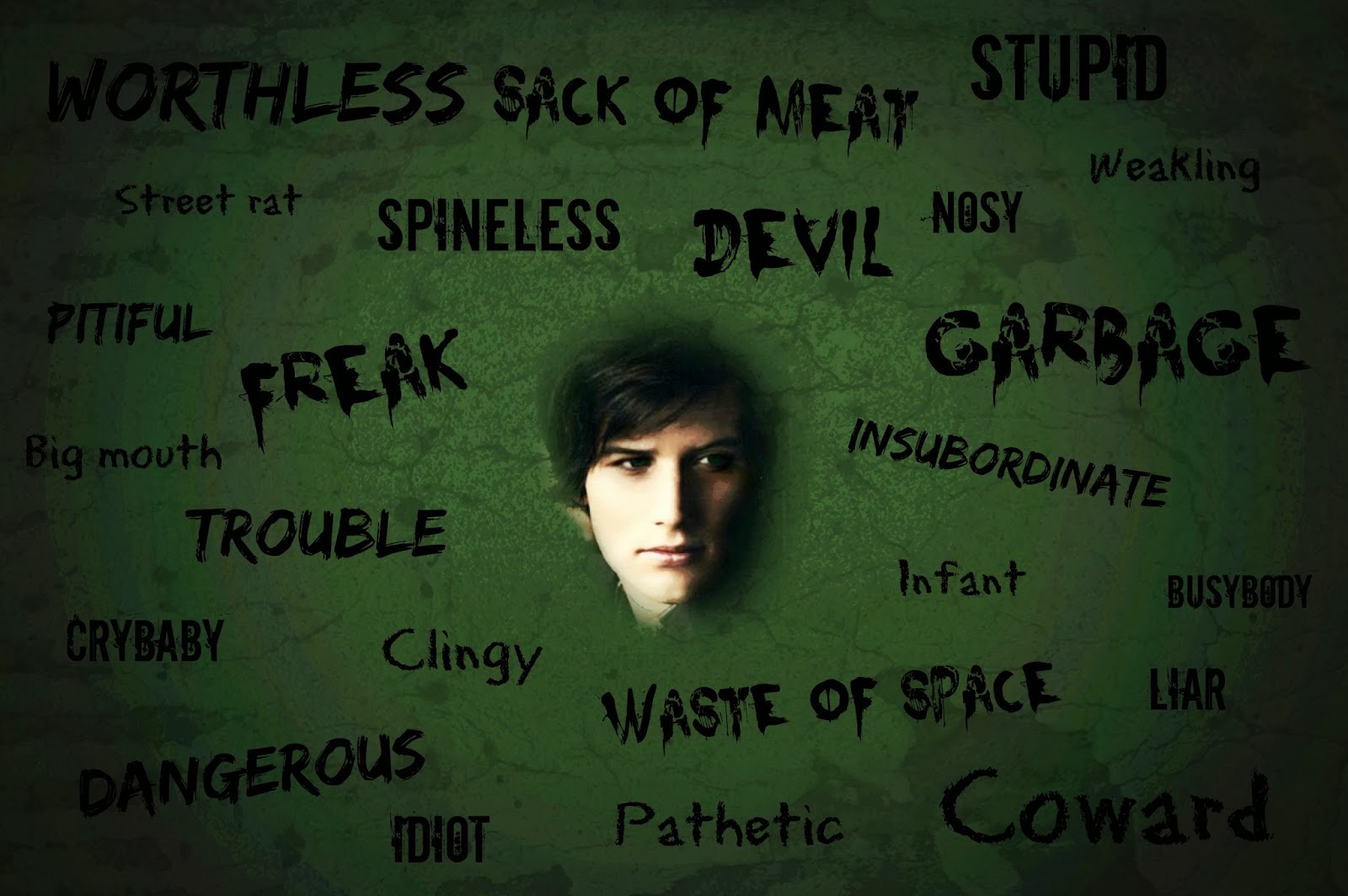
Anyways, an Insecurity Map is basically just a graphic I create that records negative things my characters think about themselves, as well as things others have said to or about them that have seeped into their minds and now influence the way they live their lives. 

(Disclaimer: I do not own the photos used in the maps. I retrieved most of them from Pinterest, and I claim no rights to them. I simply use them for private, non-commercial purposes in representing my characters.) 


Jorthen Lavahr ('The Sehret Chronicles', High Fantasy)


Shaetha Sohran ('The Sehret Chronicles')


Sohrem Terahl ('The Sehret Chronicles')


Val(erie) Richards ('Distorted Dimensions', Contemporary Sci-Fi)


Is this the most effective method for thinking up and visualizing characters' insecurities? I have no idea. But it does help me. I look at this big, empty page with my character's face in the center, and I think, "I have to fill this page with as many of their insecurities as possible." This forces me to really examine the darkest crevices of my characters' souls, to remember situations in their lives that might have influenced how they viewed themselves, and to lay it all out in a succinct way. It's also a plus if I can summarize each insecurity in one word or phrase. For some, I could only pull a quote from another character that evoked a basic sense of the insecurity the character in question possessed. For example, a character's map might include the quote, "Why can't you just leave well enough alone?" I have a basic sense of how this might affect my character's view of himself/herself, but it is difficult for me to sum it up in one word. So in those moments where I feel I cannot summarize without obscuring my meaning, I just throw in a quote that gives the general idea. The point is to figure out what your character thinks of himself/herself and make it into a visual. You could also do this for positive things they think about themselves, I suppose, but since insecurities run so deep and affect so many facets of a person's being, I chose to make maps for them first. 

So, how can you make one of these for yourself? Here are some basic instructions: 

For a digitally-generated map like those pictured above: 

1. Grab a background. This could be a normal photo, but that might be distracting. Your best bet is to grab some random photo (preferably high-resolution), take it over to a program like PicMonkey, and use the 'Canvas Color' effect to cover up the original photo with whatever color you think best represents your character. Or, you know, just black or white. Whatever works for you. 

2. Choose whether or not to include a photo of your character, and use the 'Overlay' effect to add them to the map. 

3. Start thinking. You might start with something as basic and shallow as 'Clumsy', 'Ugly', or 'Busybody', and work your way on to the deeper ones, such as 'Failure', 'Not good enough', or 'Toxic'. If you want, throw in quotes from other characters that have influenced your character, like, "You'll never amount to anything," "Why can't you be more like [insert name here]?", etc. Anything goes. This is your character -- take this time to get to know them. Open the gates to the storehouses of their deepest insecurities, and exploit their secrets. (Did I say that out loud?) 

4. Add whatever visual effects you desire to make the map look cooler. Or just leave it as it is. I personally like to make these things as visually appealing an personal to the character as possible. For example, I use their favorite colors as the background colors, and a character who loathes himself will have a darker-colored map than one who tries to think positively and copes more effectively with her insecurities. If you want the effects to change the look of the character's face or of the text, you'll need to merge the various layers so that they're all stuck in place and edited together. 

5. Save the map and store it somewhere for future reference. 

(P. S. DO NOT try to apply the 'Canvas Color' or an equivalent feature if you decide to change the color after you've already added text or pictures. It will cover everything you've done with whatever color you select. It's basically like taking a physical canvas and covering it in new paint. It's a blank slate, which you do not want to create after you've gone to the trouble of creating and tweaking this map. Instead, use 'Tint', and use the eraser on areas where you do not want to add the new color.) 

For a more basic, physical map: 

1. Take a piece of paper and write your character's name on it. 

2. Do the same as above -- start writing the first insecurities that come to mind for your character. Like I said, sometimes it's easiest to start with surface insecurities that are more obvious to others and work your way down to the ones only your character realizes, or maybe even that they've denied long enough to forget they have them. Another method may be to start with the deep ones that you already know and branch out into other deep ones, or swim up to the surface ones that bubble up from the deeper ones. It all depends upon how well you already know your character, and what starting point you prefer to use. 

3. Again, store this somewhere for future use. You might need to reference it later while looking for ways to torture -- er, develop your character's story arc. 

All seriousness aside, have fun with this, you guys. This is nowhere near a scientific method -- it's just a little exercise in getting to know your character, getting a feel for how they view themselves, and figuring out how their self-image might affect their thoughts, behaviors, and ultimately your plot. 

Hm. I wonder what would happen if someone made an Insecurity Map for the Doctor. What might be on it? What do you think? Pick your favorite fictional character and make an Insecurity Map for them. Use deduction if necessary. Look at what they do, what they say, and try to figure out what part of their self-image might have influenced those decisions. 

Huh. For once, I actually wrote a blog post that stayed pretty much on-topic. Mostly. But not entirely. I can never seem to do that. Even if I stick with the basic topic, I always digress from the original plan. Once I tried to write a guest post about the experience of writing a second book in a series, and ended up writing a post about the fear of failure. Yeah, that's just how my brain works. It's very random, and pretty much always has been. That's probably why I can never completely stick to a plot... 

But, as always... I digress.