Thursday, February 5, 2015

'Street Rats' - Part One

Hey there fellow digressors. Sorry I've been so absent lately -- among other things, copy-editing business has picked up a bit, so I've been busy with that. I had a day off today, though, so I spent it mostly sitting around and browsing Facebook and Pinterest. I saw some other people dealing with prompts and such, and decided to check out my huge board of prompts on Pinterest. I picked one, posted it to a writers' group on Facebook, and followed it myself. A couple of my friends urged me to write more and put it on the blog, or even to write more short stories and do the same with them. 

Well, it just so happens that I'd already considered this idea. And I've decided to give it a go. 

But here's the rub: I have way too many stories dancing about together inside my head. Most take place in the world of Sehret, and most are backstory pieces about my main characters or their families. And I am such an indecisive person that I can't decide which one to use. SO. Here's what I want to do -- over the next couple of days, I'll post the opening scenes for a few of these short stories, and give each a (very temporary) name so you can keep track of them. Then, in a few days (I'll have to figure out how many stories I'm dealing with before I know exactly when), I'll write a summary post with shortened versions of the scenes, and ask y'all to vote on which one most interests you. Whichever story has the most votes will be the one I continue (or try to continue) and post exclusively here on the blog. Let me clarify: These scenes are not in any actual book that I'm writing at the moment. They may become their own novellas or be sorted into an anthology of short stories at a later date, but right now, the only way to read them will be by coming here. Think of it as a serial novella which you get to read as it's written, and on which you can give feedback if you so desire (but please, be kind). 

Another idea I've considered is designating a certain day of the week to check the 'Writing Prompts' widget in the sidebar and follow whatever prompt it gives me, and invite y'all to join in if you want. Thoughts? How many of you would be interested in something like that? 

Anyways, now that I've gotten that intro out of the way, let me introduce you to the first (not fully edited) scene of the first short story... 
--------------
Street Rats
(Temporary Title)
Prequel to 'The Sehret Chronicles: The Merchant's Son'
--------------
Lans, Reshan-Shamindo Border -- Reshan Territory
--------------
All he had to do was take it. The bread sat on the edge of the table, fresh and wafting its yeasty scent towards Tal, making his stomach grumble again. He wouldn't have felt it over the moths fluttering in there, had it not sent such a sharp stab of pain throughout his ribcage. His hands trembled from hunger and fear. How would he ever make them steady enough to steal for his brother's dinner? 
The baker turned away to deal with a customer, and Tal's heart quickened. He tensed, glanced around to be sure no-one was watching, then... 
"You don't want to do that." 
Tal gasped and spun to press his back against the wall between him and the baker's stand. His pulse pounded in his head, and his stomach churned. 
A boy of about his age with straggly black hair and keen blue eyes crouched next to him and grinned. "New to this, are you?" 
"Keep quiet," Tal hissed. His hands shook, so he curled them into fists. "This is risky enough as it is." 
"It's risky because you don't know what you're doing. Me, on the other hand? I could get that bread in less than the amount of time you've spent shaking behind this wall." 
Darr's voice rang through Tal's head. "Quit shaking and get the job done. There'll be time enough to think things through later." 
He swallowed, glanced over his shoulder, then fixed his gaze on the newcomer again. "...Who are you?" 
"Name's Ryst. This is my territory." 
"It's Reshan territory, stupid." 
Ryst snickered, making Tal flinch. "So do you want that bread, or not?" 
Tal worked his jaw. "I've stolen before." 
"Sure, sure you have." Ryst crept to the edge of the wall and peered around it. "All right. The customer is leaving." 
Tal found himself creeping up behind Ryst and trying to peek around him. His heart leapt to his throat again, and he pulled back. "Do we go now?" 
"Back," Ryst hissed, and shoved Tal back far enough to retreat himself. 
Tal barely caught himself before he could fall. Frustration rose within him, and he glared at Ryst. "Why did you distract me? I could have made it." 
Ryst sighed heavily and rolled his eyes. "If you're counting on customers to distract him, then you never go during the first sale of the day. He won't let his guard down long enough to let you in until he feels safe looking away that long." 
"I don't have all day. I just need enough time to run in and grab the bread." 
Ryst snorted. "And then he'll spot you and call the guards. You might think you're fast, but you won't get away if you try something like that." 
Tal tried, but he couldn't think of a proper response. He looked away and tried to keep a neutral expression. His eyes stung, and he blinked hard to get any stray flecks of dust out of them. 
He felt eyes on him, and when he looked again, Ryst was watching him. "What's your name, anyhow? I haven't seen you around here." 
Tal swallowed hard, then cleared his throat and tried to sound as grown-up as possible. "Talsyn Lethar. I... didn't used to come here often." 
"Talsyn Lethar?" Ryst wrinkled his nose. "Too long. How's 'Tal' sound?" 
Tal shrugged. "It works." He was actually used to having his name shortened that way, but he felt no need to point it out to a thief he would probably never speak with again. 
"Fine then, Tal. How old are you?" 
"Why?" Tal glared at him again. "I don't even know your full name. Why do I have to give you my whole life story?" 
Ryst rolled his eyes again. "Fine, then. Don't tell me your age." He inched forward on the balls of his feet, then glanced at Tal. "If I snag that bread, I get a share, right?" 
"What kind of share?" 
"Half." 
"One third." 
"Half, or you can grab it yourself." 
"I have a brother to feed, dimwit." Tal tried to make the words sound hard and clipped, but his voice trembled, betraying hi desperation. Could he really get the bread on his own? Ryst was right -- he had no idea what he was doing. He'd only stolen twice, and both time were under Darr's supervision. Both times, Darr had stressed to him how this was not a permanent solution, only a quick fix until they could get on their feet again. 
But Darr wasn't here, was he? Not that he had really been there in life, either. 
It took him a moment of staring to realize that Ryst had vanished from his perch by the wall. 
Tal blinked and scrambled to his feet. Where had the rat gone? Stolen the bread, no doubt, and run off with every bit of it. Well, maybe that was fair, but it wouldn't help Tal fill any stomachs tonight. He glanced nervously about and fought the panic rising in his chest. He had to think. If Ryst's assessment was accurate, an attempt at theft now would more likely earn him a trip to jail than a meal. He couldn't afford that. He also couldn't afford to sit here all day coming up with plans if he wasn't going to follow through on them. 
He groaned and paced away from the edge, ran a hand through his greasy black hair. This whole trip had been a bad idea. It had been hard enough saddling up the old hag's gelding and getting it here. And leaving his brother on that hill outside of town, without supervision? While safer than leaving him at the house, it was still a monumental show of idiocy. He had to get out of here now. He had to grab Siran and-- 
"Hey, Tal-boy." 
Tal started and fumbled at his tattered belt for the sharpened stick that he'd hung there. He jabbed it out ad he whirled around to face the speaker. 
Ryst laughed and tossed a fresh, piping hot loaf of bread from his right hand to his left. "Still working yourself up, I see. Here." And with that, he flung the loaf into the air in Tal's general direction. 
Tal dropped the stick and caught the loaf in mid-flight. He turned it over in his hands, ignoring the way it burned his skin. The smell wafting from it made his knees weak. Upon closer examination, he saw that the loaf was whole. He frowned. 
"Good enough?" 
He looked up to see that Ryst was still watching him. Tal lifted the loaf as if putting it on display. "What about your share?" 
Ryst shrugged. "Break it off if you like. I'll eat something. Unlike you, I'm used to stealing for myself." 
The words stung, but Tal could barely hold back a grin as he stuffed the load into his bag. He had to get back to Siran. They had to get back to the house before the old hag got sober enough to realize that they'd gone. 
"Hey, shaker." 
The words made Tal stop and face Ryst again. His face flamed as he remembered that he hadn't acknowledged the efforts made to get the food now bulging in his pack. "...Thanks." 
"Actually, I was just going to say that my name is Rystar Teln." Ryst shrugged. "Just in case you were still wondering." 
Tal swallowed hard again and nodded. "...Teln. I'll remember." 
"I'd rather you didn't, actually. The name's Rystar." And here Ryst stepped forward and extended his hand. "Think you can remember that much, Lethar?" 
Tal hesitated a long moment, then took Ryst's hand and slapped his palm. He nodded. "Sure. And just call me Tal." 
Ryst returned the slap and grinned faintly. "I guess I probably won't be calling you anything, if you're not sticking around. You really going to feed yourself and that brother of yours with one load of bread?" 
"We've made do with less." Tal stepped backwards and lowered his hand. "I have to go. he's waiting." 
Ryst nodded. "Power to you, Tal. And lots of it." 
Power. Now there was an elusive commodity. Tal shrugged. "Sure." He turned again to leave, then hesitated. "Hey, Ryst--" 
But when he turned again, Ryst was gone, vanished as if he had never been there in the first place. 
Tal looked down at his satchel, then at the ground where Ryst had stood. After a long moment of thought, he turned and sprinted off in the direction of the hill where he'd left his brother. 
When he got there, clouds had just begun to roll in over his head, and the air was pregnant with telltale moisture. Tal shuddered and quickened his step. He spotted the patch of grass where he'd made Siran sit not an hour earlier. 
Nothing. The grass was bare. 
His heart leapt to his throat again. "Siran?" His voice came out hoarse, and he nearly tripped in his haste to get up the hill. He reached the patch of grass in question and patter it as if to be sure that no-one sat there. His eyes had not deceived him. Panic swelled in his chest, stole his breath from him. He whirled around and panted for breath. "S-siran? Siran, where did you go?" 
Could he have wandered into the city? Had Tal passed him in his hurry to get there? What if one of the merchants had nabbed him, declared him a Shamindo street rat and locked him up somewhere? What if-- 
"Tal?" 
Tal nearly cried out from relief when Siran sprinted over the crest of the hill towards him. Tal stumbled up to meet him, grabbed hold of his arm, and dropped to his knees before his little brother. "Siran, I told you not to wander off like that!" 
Siran's green eyes grew wide, and he tried to jerk his arm away from Tal. 
A bit of remorse left a lump in Tal's throat, and he released Siran's arm. "I'm sorry. I was just... I just didn't..." His words trailed off, and he winced, then touched Siran's arm more carefully. "Look, Siran, you know I wouldn't hurt you, right? Not ever." 
It took a long moment, but Siran nodded and wrapped his arms around Tal's neck. 
Tal blinked hard and returned the hug, then took a deep breath. It was time to be the big brother here. No more motherish panic attacks. He reached for his satchel and pulled the flap open. "I got something in the market for us." He reached into the bag and pulled the loaf into view. 
Siran's grin was instantaneous. "You got food?" 
Tal relaxed again and managed to return Siran's grin. "Yeah. I had a little help, but we won't go hungry tonight. Here..." He broke off a piece and offered it to Siran. "Chew it slowly. This will have to last us until I can get some more." 
If his brother heard his warning, he showed few signs of it. Siran stuffed the morsel into his mouth all at once, and seemed to have no intention of chewing it. 
Tal laughed. "Eacy there. Don't choke yourself." 
Siran coughed and ducked his head a little, then made a more obvious effort to chew his food. All the same, it was barely five seconds before he swallowed. 
Fair enough. Tal broke off a piece of the bread or himself and took a bite of it. The succulent, yeasty taste almost made him cry out with pleasure. He could see why Siran's self-control had gone out the window. But this had to last. He finished his piece and stuffed the rest of the loaf back into the satchel. "We'll have the rest at the house." 
Siran's face fell. "But she'll take it." 
"No, she won't. I'll hide it so that she won't ever find it." Tal offered a hand to Siran. "Trust me?" 
A pair of wide eyes met his, then Siran nodded, smiled sheepishly, and slid his grimy hand into Tal's. 
Tal squeezed his hand and led the way back down the hill. Siran's feet slipped enough times that, by the time they reached the bottom of the hill and approached the animal they'd ridden into the city, Tal had hoisted his brother onto his back and had a pair of arms wrapped tightly about his neck. It was all he could do to hold them far enough out to avoid choking. He helped Siran mount and began to fasten their satchel to the saddle. Something bumped his rear, and he swatted without looking. "Settle down, horse." 
The black gelding, Taryk, nickered and nipped again. Siran giggled. Tal grimaced and ignored the animal until he had the bag secure. Taryk bumped him with his nose, and Tal sighed and rubbed it. "You're a real chore, aren't you?" 
This must have been enough, for a moment later, Taryk bobbed his head and began to graze again.
"Oh, no, you don't. You'll eat at home just like us." Tal swung into the saddle and helped Siran center himself on the saddle. "Ready?" 
"Can we make him gallop today?" 
If this nag galloped, he'd fall apart halfway home. "We'll see. Just hang tight, all right? We'll be home soon." 
Siran nodded and took hold of the saddle horn. Taryk seemed none too pleased, but ceased his grazing, and when Tal picked up the reins and kicked, the animal tossed his head slightly and began the eternal ride towards home. 
--------------
Copyright (c) 2015 by C. F. Barrows

Wednesday, January 14, 2015

Character Interview #8: Sern Jesyn

Sooooo, this post is long overdue, I know, but I figure it's better late than never, right? 


Sern Jesyn

What did the last person you punched get punched for? 

In what context? 

Excuse me? 

Well, I suppose I should rule out anyone I had to punch in combat. Not that I've been in many battles over the past several years, but it would be difficult to remember each individual and exactly what my motivation was in punching them. 

...Fine. In a non-battle context, why did you punch the last person you punched? 

I punched Shor'el, my mentor, when he tried to give me a bed for the night. 

Okay, how about some context? Why would you punch him for trying to help you, especially if he was your mentor? 

...For the same reason I punched Krost some months previously. Both of them tried to assist me, and I was in no shape to be reasonable. They wouldn't listen to my protests, and I was too exhausted to think of many other options, so I punched them. Also, Shor'el was not my mentor at the time. He was just an old man in the marketplace who saw me pass him by looking like death, and he tried to help. I must say, he had an interesting time of it. 

Huh. And this from my most reasonable, mature character... 

You're either forgetting or choosing to overlook the fact that this was fourteen or fifteen years ago. 

Right. I also forgot that everyone always said Dertryn took after you. 

I was not myself. I had recently lost my family, and run myself into the ground trying to track down the one I had any hope of recovering. I'd found no trace. I had wounds that had gone far too long untreated, I had barely eaten or drunk anything, and I'd hardly allowed myself any rest. In my mind, finding my son was the only purpose I had left in life, and if I could not achieve it, then my life would not really be worth the living. I would either find my son or die trying. At that point, some part of me had decided that hope was lost, and that it was time to give up. So I didn't take especially well to some old man I'd never met trying to make me live a life that didn't seem worthwhile. So I punched him. 

A... natural reaction to an act of kindness, I'm sure. *ahem* Anyways, on to the next question: Why do you call Sohrem by his given name? Is there a reason, or is it just out of habit? 

The way I see it, he uses the name 'Sohrem' to escape his past. The problem is that, while he likes to think of himself as a new person, when I look at him, I just see a grown-up version of the boy I knew in Lans years ago. He seems to struggle with knowing his own identity, so, partly out of habit and partly out of a desire to help reinforce the identity that seems to fit him best, I call him by his given name. I suppose I could call him differently, but it would take a lot of effort. 

You know, for a former soldier, you talk a lot like a psychologist sometimes. 

Are we here to answer your guests' questions, or to discuss my vocabulary? 

...What color was your dragon? 

He was black. I believe he might have sired Dertryn's dragon, Tyri. Although I must say, their personalities are quite different. Krost had little difficulty involving himself in battle. He was still a one-man creature, though. Most dragons are. 

Wait, wait -- you punched your dragon? 

Excuse me? 

You said earlier that you punched Krost. 

...Oh. No, there was another Krost, a human one. He was my best friend. 

That's... confusing. Wait, I thought Cortran was your best friend. 

Krost and Cortran were brothers. Krost and I were both fourteen when we chose our dragons, and we were mischievous devils, so I named mine Krost, and he named his Jesyn. 

Whyyyyy...? 

We found it amusing. I don't know. That was over thirty years ago. 

Riiiiight... Okay, what's your favorite subject to tutor? 

Quite honestly, I don't know. I enjoy teaching history. If the families I've dealt with would allow me to tutor their children in combat strategy, that would likely be my favorite subject. 

Okay, so now a bonus question: What made you decide to tutor? I mean, you were soldier, so some of the other jobs you took make sense because of your broad range of experience gained during those years -- herbalist, handyman, forager, etc. -- but why tutoring? I seem to recall you weren't much for books as a younger man. 

You have a habit of asking very personal questions. 

Oh? Is that personal? Tell me more. 

I'll tell you, but then I'll leave, and I'll answer no more questions of that nature for you. 

Fine. Shoot. 

I doubt you mean that literally. And in any case, I don't have my bow or any arrows on hand. Anyhow, I got into tutoring because it's what Nolan wanted to do someday. I failed to save him, so he never got to live that dream. I suppose it's my way of living for him, of honoring his memory. 

Does that help? 

I've already answered your questions. Goodbye. 

Wait, no -- I didn't say you could leave yet! Sern? Hello? Grrrrrrrrrr... That man... 
------------------------------------------------------------------------------- 

And there it is, the long overdue final installment in my earlier series of character interviews. As usual, I hope you enjoyed it, and if you have any further questions, comment below. Right now, I must be off to digress elsewhere. Bye! 

Wednesday, January 7, 2015

Scribely How-To: Insecurity Maps

Hello, fellow digressors. Welcome to 2015! How have your first few days with the new resolutions been? Have you written the wrong date on very many checks yet? Myself, I've made a longer list of goals than I did for any previous year, and I expect to keep maybe half of them. Maybe. You know me -- I get distracted. There are too many shiny things in this world to have complete focus 100% of the time. 

Anyways, this post was requested a month or two back by some writer friends on Facebook, and I'm finally getting around to writing it. As any writer knows, or figures out eventually, good character development is key to writing a good story. You can have a fascinating premise, a plot so twisted it looks like a big soft-serve pretzel that the dog mangled, and the writing skills of the most popular author in the world, but if your characters are flat, you're probably doomed. I'm sure there are exceptions, but in general, this holds true. 

Why is this? Well, let me see what reasons I can think of off the top of my head: 

1. If your reader doesn't care about your main character, why should they care about anything that happens to them? If the character is hit by a car, or their mother is kidnapped, or their dog dies, why does it matter? (Well, okay, everyone will always be sad if a dog dies. Bad example.) If they're not rooting for (or against) someone, they have no reason to care about anything that happens. 

2. If your reader cannot connect with your characters, they will not connect to your story. My most effective marketing strategy has been a strange one -- in Go Teen Writers and other online circles, I will let my characters interrupt me in comment threads, I will talk about them, I will post quotes from them and discuss their quirks and deepest insecurities with other group members. People get to meet my characters, they grow to love them for their sense of humor, their intriguing backstory, or their habit of tripping over everything that crosses their path, and they say, "Hey, I love this character -- I want to read their story now." I don't even have to talk much about my ingenious (or dry) plots, my wordcraft, or anything else. People connect with the characters, and because of that, they connect (or want to connect) with my stories. It makes sense, really. While you read a book, most of the fun involved comes from hanging out with these characters, with living vicariously through them and rooting for them no matter what the plot throws their way. People may forgive a simple plot, a slightly cliched premise, or a less than dazzling writing style, provided they love the characters. To me, at least, the characters are what make or break a book. Everything else is secondary. If your characters are unrelatable or boring, you'll lose me pretty early on in the book. Make them interesting, and I'll be willing to trudge through a few more chapters of less than thrilling prose just to spend some more time with them. 

3. Characters drive the plot. Now, the extent to which they do this will vary between stories. But ultimately, the book is driven by your main character's wants, fears, and deepest desires. A plot is only interesting if what happens in it matters to your main character/s. If they don't care, then your reader won't care, either, or else they'll find your character unrealistic or incongruous and not want to keep reading. Since, as stated above, half the fun of reading a book is that you get to live vicariously through the characters, what they feel is important. What they believe and how things affect them is important. If things don't affect them, they will seem inessential or detached, and that can be detrimental to your story. 

Okay, I can only think of those three points right now, but suffice it to say, character development is extremely important. I might even go so far as to say that it's the most important part of the writing process. Think about your favorite book -- what was the plot? What verb tense did the author use? What was the message of the book? You'll probably remember most, if not all, of these. But what was it that made you love the book in the early days, when you first started reading it? Chances are that you connected with the characters, related to them in some way, or at least were intrigued by them. For many people, 'The Hunger Games' was interesting because of Katniss, because of her humanity and the struggles she overcomes throughout the series. People love 'The Hobbit' because of Bilbo Baggins and how, even as an ordinary hobbit who claims not to want any part in adventures, he goes so far out of his comfort zone and grows as a person throughout the experience. People love the characters, and so they love following their adventures. Add in a great premise, a plot that keeps you guessing, and some killer writing (literally or otherwise), and you've got the potential for a bestseller. 

SO. Now that I've proven how much of a digressor I really am, I'll get to the original topic of this post: Insecurity Maps. 

This was an idea I had recently, while thinking about one of my main characters' insecurities. It occurred to me that, while people knew about his occupation, his personality, and what other people thought of him, what he thought of himself was equally important. How a person views himself affects everything he thinks or does. A man who thinks himself very important will be more likely to assume that what he says is valid and as important as he is, and will be less likely to take the advice of others whom he deems less important than himself. On the other hand, a man who thinks of himself as worthless or beneath the notice of others might be likely to either draw less attention to himself, or to overcompensate by trying to make himself seem more important than he really is or to make himself feel more important. But at the core of it all will be his insecurities, his longing to be worthy of notice, and his belief that he never will achieve that level of worth. Because of these insecurities, he might either reject flattery because he thinks so little of himself, or accept it because it makes him feel important, depending on his personality. He may become either depressed or disproportionately angry when someone insults him, but he is unlikely to be completely unaffected, where someone with a high sense of self-importance will likely disregard the criticism because he does not think it is true. Personality influences the reaction, but insecurities affect the expression of personality. 

Say someone is extroverted, but has a deep-seated feeling of being a joke to the opposite sex. They may appear confident to others, and converse with people of their own gender very easily, but when confronted by someone of the opposite sex, they will become uncomfortable. There may be many possible reactions to this, but they will all be based upon your character's discomfort and their desire to mask or get rid of that discomfort. 

Insecurities run deep, and affect everything we do. Think about it. What's a deep-seated insecurity you've held for a long time? How much has it influenced your thinking and the way you've interacted with the world? I'd be willing to wager that it's had at least a moderate influence over you at some point in your life. I personally spent my high school years feeling as though I was beneath the notice of others, so I withdrew from them and found lots of little distractions to occupy me without interacting with people. Had I not been so insecure, I might have had more of a social life, and might not have gotten into writing or sketching or music as much as I have. The bottom line is, we all have insecurities, and most insecurities can be a significant influence on our choices in life and how our personalities develop. 

So along with your character's personality, their positive or negative traits, or their upbringings, their insecurities are vital to understanding them and making them real to the reader. I personally cannot connect to characters who are never insecure about anything. They feel too "perfect," almost inhuman, because to be human is to be insecure about something. 

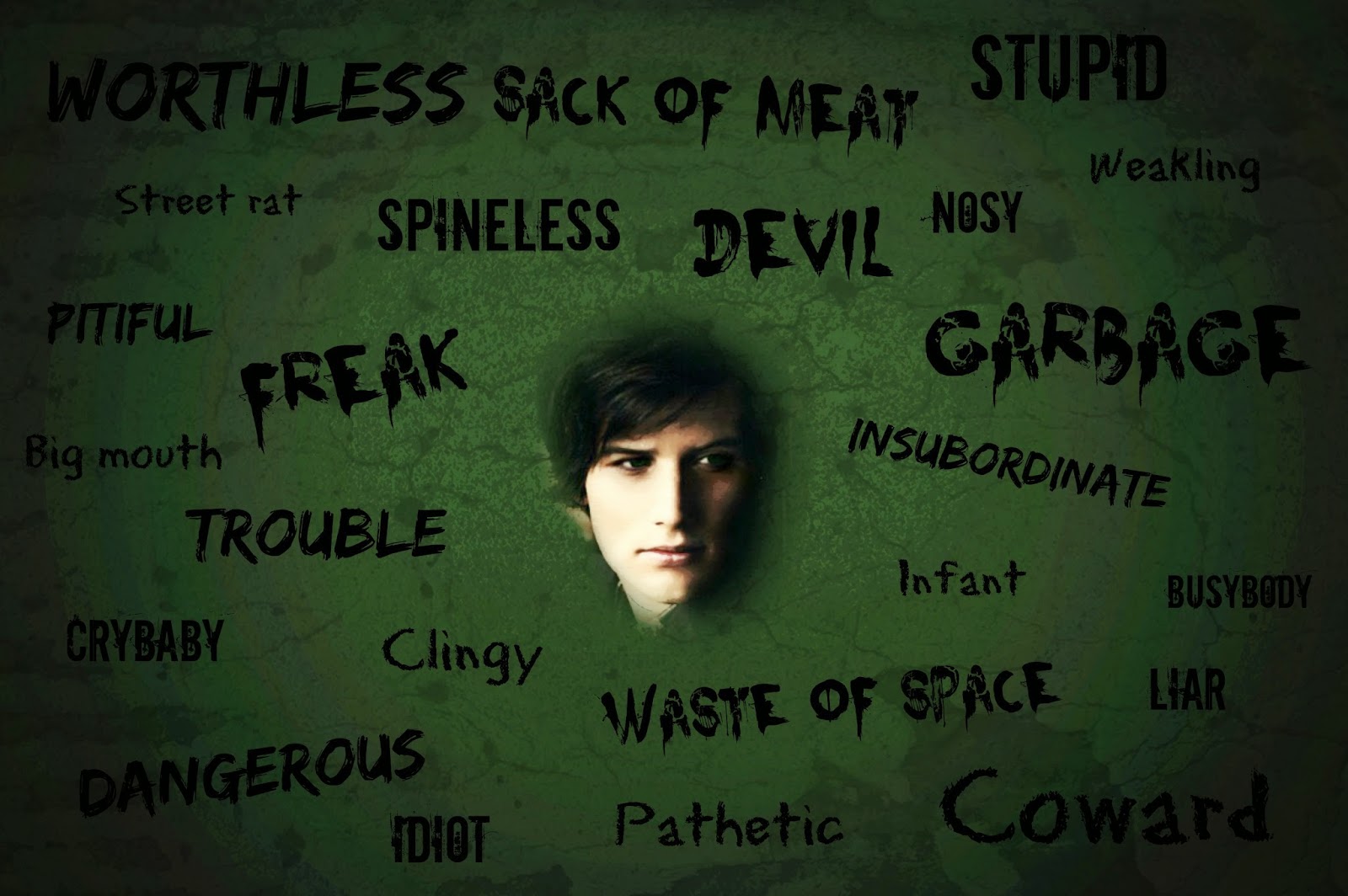
Anyways, an Insecurity Map is basically just a graphic I create that records negative things my characters think about themselves, as well as things others have said to or about them that have seeped into their minds and now influence the way they live their lives. 

(Disclaimer: I do not own the photos used in the maps. I retrieved most of them from Pinterest, and I claim no rights to them. I simply use them for private, non-commercial purposes in representing my characters.) 


Jorthen Lavahr ('The Sehret Chronicles', High Fantasy)


Shaetha Sohran ('The Sehret Chronicles')


Sohrem Terahl ('The Sehret Chronicles')


Val(erie) Richards ('Distorted Dimensions', Contemporary Sci-Fi)


Is this the most effective method for thinking up and visualizing characters' insecurities? I have no idea. But it does help me. I look at this big, empty page with my character's face in the center, and I think, "I have to fill this page with as many of their insecurities as possible." This forces me to really examine the darkest crevices of my characters' souls, to remember situations in their lives that might have influenced how they viewed themselves, and to lay it all out in a succinct way. It's also a plus if I can summarize each insecurity in one word or phrase. For some, I could only pull a quote from another character that evoked a basic sense of the insecurity the character in question possessed. For example, a character's map might include the quote, "Why can't you just leave well enough alone?" I have a basic sense of how this might affect my character's view of himself/herself, but it is difficult for me to sum it up in one word. So in those moments where I feel I cannot summarize without obscuring my meaning, I just throw in a quote that gives the general idea. The point is to figure out what your character thinks of himself/herself and make it into a visual. You could also do this for positive things they think about themselves, I suppose, but since insecurities run so deep and affect so many facets of a person's being, I chose to make maps for them first. 

So, how can you make one of these for yourself? Here are some basic instructions: 

For a digitally-generated map like those pictured above: 

1. Grab a background. This could be a normal photo, but that might be distracting. Your best bet is to grab some random photo (preferably high-resolution), take it over to a program like PicMonkey, and use the 'Canvas Color' effect to cover up the original photo with whatever color you think best represents your character. Or, you know, just black or white. Whatever works for you. 

2. Choose whether or not to include a photo of your character, and use the 'Overlay' effect to add them to the map. 

3. Start thinking. You might start with something as basic and shallow as 'Clumsy', 'Ugly', or 'Busybody', and work your way on to the deeper ones, such as 'Failure', 'Not good enough', or 'Toxic'. If you want, throw in quotes from other characters that have influenced your character, like, "You'll never amount to anything," "Why can't you be more like [insert name here]?", etc. Anything goes. This is your character -- take this time to get to know them. Open the gates to the storehouses of their deepest insecurities, and exploit their secrets. (Did I say that out loud?) 

4. Add whatever visual effects you desire to make the map look cooler. Or just leave it as it is. I personally like to make these things as visually appealing an personal to the character as possible. For example, I use their favorite colors as the background colors, and a character who loathes himself will have a darker-colored map than one who tries to think positively and copes more effectively with her insecurities. If you want the effects to change the look of the character's face or of the text, you'll need to merge the various layers so that they're all stuck in place and edited together. 

5. Save the map and store it somewhere for future reference. 

(P. S. DO NOT try to apply the 'Canvas Color' or an equivalent feature if you decide to change the color after you've already added text or pictures. It will cover everything you've done with whatever color you select. It's basically like taking a physical canvas and covering it in new paint. It's a blank slate, which you do not want to create after you've gone to the trouble of creating and tweaking this map. Instead, use 'Tint', and use the eraser on areas where you do not want to add the new color.) 

For a more basic, physical map: 

1. Take a piece of paper and write your character's name on it. 

2. Do the same as above -- start writing the first insecurities that come to mind for your character. Like I said, sometimes it's easiest to start with surface insecurities that are more obvious to others and work your way down to the ones only your character realizes, or maybe even that they've denied long enough to forget they have them. Another method may be to start with the deep ones that you already know and branch out into other deep ones, or swim up to the surface ones that bubble up from the deeper ones. It all depends upon how well you already know your character, and what starting point you prefer to use. 

3. Again, store this somewhere for future use. You might need to reference it later while looking for ways to torture -- er, develop your character's story arc. 

All seriousness aside, have fun with this, you guys. This is nowhere near a scientific method -- it's just a little exercise in getting to know your character, getting a feel for how they view themselves, and figuring out how their self-image might affect their thoughts, behaviors, and ultimately your plot. 

Hm. I wonder what would happen if someone made an Insecurity Map for the Doctor. What might be on it? What do you think? Pick your favorite fictional character and make an Insecurity Map for them. Use deduction if necessary. Look at what they do, what they say, and try to figure out what part of their self-image might have influenced those decisions. 

Huh. For once, I actually wrote a blog post that stayed pretty much on-topic. Mostly. But not entirely. I can never seem to do that. Even if I stick with the basic topic, I always digress from the original plan. Once I tried to write a guest post about the experience of writing a second book in a series, and ended up writing a post about the fear of failure. Yeah, that's just how my brain works. It's very random, and pretty much always has been. That's probably why I can never completely stick to a plot... 

But, as always... I digress. 

Wednesday, December 24, 2014

Lies People Believe About Depression

So here's the thing, fellow digressors: there's a reason why this blog is called 'Digressions of a Demented Scribe'. Several reasons, actually. You've probably picked up on several of them, if not all. I am a highly random person who's just as likely to bring up Messy Mondays, Doctor Who, or the weather in Afghanistan as she is to talk about how her day went on her blog. I have a chronic, neurological disease that messes with my head and gives me such things as photophobia (no, I'm not afraid of light; it just hurts my eyes sometimes), neuropathy (like pins and needles in the hands and feet), neurological tics (that's a new one; I keep randomly jerking my head back and forth), anxiety, and depression. 

One one accepts the idea that Lyme is a real disease, and that it can be chronic (and believe me, not everyone is willing to accept that), most of these are readily forgiven. People understand that, if microscopic parasites have gotten into your bloodstream and made their way to your brain and throughout your nervous system, things are going to get a little wacky. Heads might jerk, light might sting, and it might get uncomfortable to walk. But things like depression and anxiety are often stigmatized, and are widely misunderstood, even if they come about in relation to a separate, officially diagnosed issue. Depression in itself is a diagnosable, treatable problem, but all the same, there are a number of lies that people in general tend to believe about it, whether they pay lip-service to those lies or whether they just hold them in the back of their minds as "something I heard from some knowledgeable friend once." 

So, without further ado, here are a few... 

Lies People Believe About Depression (Debunked) 

Depression is just a bad mood that comes and goes. 

Depression is more than just a bad mood, though such moods are common when the disease is present, due to a low amount of serotonin and other mood-regulating or pleasure-related chemicals in the brain. In fact, sometimes it is not a mood or a feeling at all, but an absence of feeling, and absence of pleasure or of the ability to appreciate what once made a person happy. It may frequently involve tears and guilt and a crushing feeling of hopelessness that strips you of everything you are. But oftentimes, it may keep you chained to your bed, or sitting in a chair in your room, staring at a blank wall or an empty page, struggling to feel, to remember what it might have been like to experience joy, or excitement, or even pain or sadness. It is more than a sadness -- it is a loss of self. And although the intensity of one's "bad mood" may rise and fall, that pervasive sense of being different, of being a non-self without the ability to "fix" oneself, or to even remember who that "self" was before depression, persists. 


Depression has no physical symptoms, and is not a viable disease. 

Clinical depression is a highly researched disease with multiple neurological symptoms, and is often made marginally more bearable through treatments and activities that promote the production of healthy chemicals in the brain, although this is only a temporary "fix" meant to help with day-by-day coping, not a cure. It can affect not only one's mood, but also sleep cycles, concentration, energy levels, body weight, and even a tendency towards substance abuse and other self-destructive behaviors (usually as methods of coping or escape). Genetics can also play a role -- some people carry a gene that makes them more likely to suffer from depression or a similar disorder, and this can be passed on to their offspring. Therefore, depression often runs in families, though severity may vary between affected family members. 


Depression impacts nothing beyond a person's basic mood swings. It does not interfere significantly with its victims' lives. 

Among the many documented symptoms of depression are fatigue, lack of focus, severe loss of motivation (to the point where some severe sufferers lose even the will to leave their beds in the morning), and a loss of interest in activities that would normally be pleasurable. I realize I am repeating myself here, but one of the major points here is that depression is not just a mood -- it is a disease, and it should be taken seriously. 


Depression is a choice people make. If they would just try harder, smile more, make an effort to think more positively, exercise more, etc., they could snap out of it. 

Sorry, no. While some of these suggestions might help to alleviate symptoms temporarily (for example, exercise has been proven to release pleasure-related chemicals in the brain of which the sufferer is usually deprived, and promotes health overall), they do not cure depression. A person with hypoglycemia needs frequent blood-sugar-boosting foods to keep them going, but the foods do not cure the hypoglycemia. They are necessary, yes, as exercise and other such things are necessary to someone with depression, but they do not cure the root problem. You would not give a hypoglycemic person a big jar of nuts and say, "Here you go -- you're cured. Now you don't have to worry about that pesky hypoglycemia anymore." Would you? Of course not. It might help deal with their deficiency in the short term, but their blood sugar will run low again when the nuts run out, because that is the nature of their condition. Likewise, you can do things to temporarily boost a depressed person's mood, but eventually the high will wear off. The disease is still there. That does not make the mood-boosters unnecessary or irrelevant, but it does mean that they will not be sufficient to cure the person of their issues on a permanent basis. 


Depression sufferers are selfish and immature because they choose to wallow in self-pity and bring down the moods of everyone around them. 

Most (if not all) depression sufferers actively spend their days battling with their own minds in an attempt to think positively. They are constantly bombarded with thoughts of, "You're pathetic. What's the point? Nobody likes you. Your life stinks. You stink. You should just lock yourself in your room and never come out again. You're a freak. You shouldn't even be talking to normal people. This is all your fault. You should be able to just walk out there and be normal." To even make the effort to leave one's room and participate in normal activities often takes tremendous effort, and is exhausting for the person battling them. Personally, I sometimes find myself telling my brain out loud to shut up and leave me alone. Sometimes it works, sometimes it doesn't. The point is, if people with depression always wallowed in self-pity and made no effort to push past the thoughts their brains manufactured for them, you would never see any of them (us) out of their (our) rooms or even attempting to do anything or to interact with people. If they let their brains win, they might not even live long enough for you to realize they were depressed. They are far from selfish pity-party-throwers -- they are warriors. And their private war should be respected, as hard as it may be to relate to something you cannot always see from the outside. 


Depression sufferers are just lazy and looking for an excuse to get out of work, school, etc. 

Depression sufferers would like nothing more than to be healthy and happy, and to move on with their lives just like the 'normal people'. They want to succeed and to be treated with the same respect as everyone else, and most of them work hard to earn that respect. I have never met one who did not wish they could just be normal and happy like everyone else. I've never met one depressed person who said, "Hey, this depression thing is really convenient. Now I have an excuse to lie around and do nothing all day." It just doesn't happen. If someone with depression appears to be lazy and unmotivated, it is only because they are exhausted and find the idea of doing anything productive daunting beyond belief. 


People with depression are insecure attention-seekers who need to get ahold of themselves. 

It is true that depression sufferers tend to be insecure, but very few actually seek attention unless they are truly desperate and don't know any other way to get help. Most live their lives in fear that those they know will discover the darkness of their inner lives and reject them. People with depression also tend to see themselves as burdens on those they love, and are particularly sensitive to rejection. As such, they do their best to hide their problems with others and appear as "normal" as possible, but when your mind insists on assaulting you on a regular basis, sometimes acting normal is impossible. 


People who try to express or alleviate their depressive symptoms through such destructive behaviors as cutting, eating disorders, drug abuse, etc., are freaks to be shunned, and will obviously go to Hell for making these choices. 

Okay, no. Just no. Where did this idea even originate? True, self-destructive behaviors are terrible things to adopt, and might even be categorized as sin by some, but nothing is beyond the grace of God. I mean, think about it -- God forgave and redeemed Saul of Tarsus, a man who built his reputation on his religious supremacy and persecution of Christ-followers. (Read the book of Acts. Saul is mentioned a couple of times in reference to the stoning of Stephen in chapters 5-7, but much of his story starts in chapter 9.) In fact, Saul of Tarsus became the Apostle Paul, one of the most faithful and effective witnesses for Christ ever to be seen. His crimes before coming to Christ were despicable, and I'm sure many believed he had no chance of redemption, but God worked through him nonetheless, and his mistakes now serve as a testament to us of how great God is and how mighty He is to save those who come to Him for forgiveness. 

So taking this into account, in what context can we assume that any person engaging in any behavior (no matter where their sins may fall on our scale of sinfulness) is past redemption? And beyond this, when is it okay to tell someone desperate enough to engage in self-destructive behaviors in an attempt to cope that they are irredeemable freaks unworthy of "righteous" people's attention? People who engage in self-destructive behaviors, while they may sometimes be crying for help with their actions, tend to engage in such behaviors as either a form of self-punishment, a release of tension, to make themselves feel again when depression has numbed them, or as a way to escape from the pain of their everyday lives. They are complex individuals created by God and loved infinitely by Him, and they are in pain. Excruciating pain. Pain so bad that they feel they need to hurt themselves just to survive. This may seem counter-intuitive, but it's common. And it is not your place, not my place, not anyone's place, to judge them. It is our place to love them and to do everything we can to help them deal with the problem behind these behaviors. You've heard that you can't treat the symptoms and ignore the disease and expect the patient to make a full recovery. Well, there you go. 


Depression is a character flaw, and proof that the sufferer doesn't really trust God like they should. 

Depression is a mental disease. It is neurological. It is perpetual. It is torturous and paralyzing. It is not a choice. It is not a mere state of mind. And it is not a sin. And for more on the subject of whether suffering is the result of a lack of trust in God, check out the book of Job. Seriously. Go look it up. Right now. Throughout the book, Job was judged and condemned by advisors who believed that his suffering was the result of some hidden sin, when all the while it was a test. It had nothing to do with Job's sins or with any lack of love for or trust in God. It had everything to do with putting the trust and love he had to the test, and proving just how strong and true it really was. Even when Job did not understand what was going on, even when he wished for death and questioned why God had brought it upon him, still he trusted that God was there, and glorified Him even when he didn't feel like doing it. Job did nothing to deserve his suffering. Likewise, whatever mistakes a person with depression may have made in their life, their depression should never be assumed to be a symptom of any hidden sin or lack of trust in God. Again, it is not our place to judge -- it is our place to accept people as they are, to acknowledge their pain without condemning them for it, and to love as God loves us. 


Depression is a temporary phase, and not to be taken seriously. 

Clinical depression, by its very definition, is a medical condition which can last months, years, or even for a person's entire life. It can severely impair its victims' ability to function and associate with others, or even to take care of themselves, and it drives some to take their own lives, either intentionally or by accident while engaging in self-destructive behaviors such as those listed above. And the longer it is left alone, the worse it gets. 


If someone with depression seems to have several good days and acts "normal" for longer than usual, this is a sign that their depression is gone, and should no longer be acknowledged as a reality. 

Sometimes people with depression have good days. They might even have an entire week of being able to behave normally, and those who are especially good at acting might be able to pass as a healthy individual for even longer. These highs, while enjoyable and encouraging, do not last forever, and often the depressed person may feel even worse when the high crashes, due to profound feelings of disappointment, fear, and guilt because they thought they were getting better. They truly want to be happy and healthy, as stated above, and when a high crashes, the loss of that empowering feeling may make the sufferer feel as though they have lost control. However, they may continue to fake the high so as not to disappoint their loved ones. In this way, the friends and family of depression sufferers are often left in the dark by a well-meaning person who only wants to spare them the hurt which the sufferer himself/herself bears every day and night. 


If you discover that someone you know is depressed, you should ignore their complaints and divert the conversation whenever possible. They will cheer up eventually on their own as long as no-one fosters their negativity. 

If you discover that someone you know is depressed, support them. Yes, cheering them up can sometimes be helpful (depending upon the person and how severe their depression is), and dwelling on the negative aspects of life can certainly be harmful. But what this person needs from you now is not just a pep talk, not just a cheery conversation about the weather or a TV show -- they need an ally, someone they know will be there no matter how rough things get, someone they can trust with their deepest insecurities. They need you to be the voice of sympathy and reason that does battle with the voices of insecurity and hopelessness that scream at them at all hours of the day. They need to feel that they can express their feelings and seek your help without being judged for what they say or do. Basically, actions speak louder than words, and your actions, whatever their nature, will positively scream your intentions in times like these. 


If depression is not a character flaw, then it must be the result of sin. Therefore, depression sufferers should be confronted and judged until they realize the error of their ways. 

Let's just start here: "Judge not, lest ye be judged." (Matthew 7:1, KJV) We already looked at the book of Job and discussed how suffering is not necessarily the result of sin or of a lack of trust in God. Suffering is a natural part of living in this sin-cursed world of ours. But even if it were the result of a person's own private sin, that is between them and God. Again, it is not your job to judge them. It is your job to love them. Yes, encourage them to think of good things. Gently encourage them to abstain from behaviors which harm themselves and others. Be honest, but also be loving. And in the case of depression, recognize the tremendous measure of strength it takes just to get through each day while suffering from this crippling disease. The error of their ways? Your friend, family member, etc. deserves a great big hug just for getting out of bed today, just for drawing breath again and again despite what their brain might try to make them do. Remember, you are not them. You do not know how they feel or what they are going through. You are in no position to judge them. 


And now, here's a big one: 

Depression sufferers are weak. 

No. No, no, no, no, no, no, no, no, no. 

And again, just to clarify: NO. 

Try this: Imagine the person you trust most is standing in front of you, the person whose ideas tend to most often match your own, whose opinion you value above all others. Now imagine that they're spouting out lies about you, horrible lies that tear you down and strip away whatever dignity you might have had previously. Now imagine they're sitting on your shoulders, and that you're forced to carry their weight all day, every day, and that they keep whispering these horrible lies while you try to sleep at night. They repeatedly tap your head in the most irritating and distracting way, making it impossible to focus, and whenever you try to do anything enjoyable or productive, they scream the futility of your actions into your ear, and don't quiet down until you give up and go back to bed. Then they just go back to whispering. You try to shake them off, but every attempt just makes them grab on more tightly. It's as if they're stuck to you with Gorilla glue, and it takes more energy than it's worth to pry them loose, so after the first couple of days, you just give up and try to ignore them. 

And they blame you for all of it. 

Over time, you begin to realize that this is not a person on your back -- it is a monster, and it's digging its claws into you, especially into your head. It makes it hard to sleep at night, and hard to get up in the morning, and what seemed like just a set of hurtful annoyances on the first day becomes a terrible routine and soon, you start to believe that all this is somehow your fault. You deserve this. Maybe those things the monster is saying about you really are true. Maybe nothing you do has a point. Maybe there's not really glue sticking them to you; by now, you should have just been able to shake them off and move on with your life. But they're still there. So now you believe you are a pathetic weakling who deserves all this distraction, discouragement, etc., just by nature of the fact that you're not able to get rid of this horrible, destructive person on your own. 

Congratulations. You've just gotten a tiny glimpse of what it's like to live with clinical depression. 

Now imagine that everyone around you sees you limping along with this leech on your back, but either they cannot see your burden, or they choose to ignore it, despite any pleas you may manage to communicate to them. And they start spouting things at you: 

"It's just a bad mood. You'll be fine." 

"Something on your back? Of course not. It's all in your head." 

"This isn't going to affect your work, is it?" 

"You know, if you would just straighten up and smile more, you'd forget all about that imaginary monster on your back." 

"How can you be so selfish? You should be running alongside all the rest of us, not asking for help with some little pest that's supposedly on your back. Shut up and man up." 

"You're just doing this to get a break from work/school/chores, aren't you?" 

"Sheesh, quit whining so much. It's not like you really have anything to complain about. Get ahold of yourself. You wouldn't even have these problems if you'd just stop complaining so much." 

"If there really is something on your back, it must mean God is punishing you. You're such a horrible person." 

"You're such a weakling."  

How do you think you would feel? 

I hope this post has been helpful in debunking a few of the common myths regarding depression. My intent is not to antagonize anyone, but simply to shed some light on a commonly misunderstood condition and help those who know and love someone with depression be better equipped to understand and help them. 

If you are depressed and thinking about hurting yourself, or are already engaged in some self-destructive behavior, I urge you to seek help. Talk to a parent, a trusted friend, a doctor or your pastor, but realize that you do not have to deal with this alone. Even if you have difficulty finding the support you need in your immediate group of friends and family, there are other options. Sites such as IMAlive allow you to chat instantly with someone who is trained in crisis intervention and wants desperately to help you through this, and the National Suicide Prevention Lifeline can be reached at 1 (800) 273-8255. And above all else, remember that you are a unique human being created by God, loved infinitely by Him, and with a purpose in life far beyond anything you can see right now. However hopeless things might seem right now, you are not alone, and there is always hope. The next time you feel weak or worthless or like no-one cares, place your hand over your chest and feel your heartbeat, how it's still going despite everything that has happened to keep you from making it to today. And remember that Jesus Christ came to earth to give His life for you, to take your sins and pay for them with His own blood, because HE LOVES YOU. And no disease, no mistake you've made, nothing anyone else says can change that. 

Thanks for reading. Oh, yeah -- and Merry Christmas. I ought to make an effort to post something a bit more cheery before Christmas comes tomorrow. Is it tomorrow already? Wow. That's close. And guess what, you out there still reading this? You made it this far. Now keep holding on, and celebrate Christ's birth, death, and resurrection with me and everyone else who remembers the true meaning of the holiday. He came for you, you know. Christmas happens because God loved you enough to send His only son for you. I think that's something worth celebrating, don't you? 

But, of course... I digress. 

Monday, December 15, 2014

The Triumphant Return (And Another Musical Monday Post)

Hello there, fellow digressors. I bet you thought I'd run off in the T.A.R.D.I.S. and forgotten about you all, huh? Well, I'll blame my scattered brain for that. Poor thing takes a lot of blame. Maybe if it would behave, that wouldn't happen so much. 

So a couple of weeks ago, I started something called 'Musical Mondays', posted one song, then disappeared. Well, it is Monday again, and guess what else? Christmas is ten days away! (Yayyyyy!) 


So today, in honor of the yuletide season, I present to you a hauntingly beautiful rendition of 'Let All Mortal Flesh Keep Silence'. 


And here are the lyrics (derived from Habakkuk 2:20, "But the Lord is in His holy temple: let all the earth keep silence before Him."): 

"Let all mortal flesh keep silence,
And with fear and trembling stand;
Ponder nothing earthly-minded,
For with blessing in His hand,
Christ our God to earth descendeth,
Our full homage to demand.

Rank on rank the host of Heaven
Spreads its vanguard on the way,
As the Light of light descendeth
From the realms of endless day,
That the powers of Hell may vanish
As the darkness clears away.

At his feet the six-winged seraph,
Cherubim, with sleepless eye,
Veil their faces to the presence,
As with ceaseless voice they cry:
Alleluia, alleluia,
Alleluia, Lord Most High!

Alleluia, Lord Most High!"

Ralph Vaughan Williams


I personally get chills listening to this song. I tend to go for the mellow, flowing pieces, especially in minor keys. I have to make a conscious effort to compose anything else. Usually, if I just sit down to play something off the top of my head, it will sound like the score to a sad scene from some movie somewhere. It's fun, though. 

But I digress. What do you think of this song? Do you have a favorite Christmas song? I'd love to hear from you! I'm horrible with favorites, though, so if you ask mine, be prepared to spend the next hour reading my list. 

P. S. I know that a while back, I posted the opener for a character interview (the final one in this series) with Sern Jesyn here. However, given the state of my brain and the fact that I only received two questions from readers, I never posted the results. I will try to garner more questions, and if I get enough in the next day or two, I'll post the results. Otherwise, I might just have to directly reply to the askers and not do a full interview.